Crypto Shifts Risk-Off
AI weakness, deleveraging, and macro concerns spill over into crypto markets.

Investing in digital assets or tokenized equities, and their respective derivatives, involves a substantial degree of risk. Market prices can be highly volatile and unpredictable. Movements in the market can result in significant, rapid, and potentially total loss of your invested capital. Before allocating capital, you should carefully evaluate whether such investments align with your financial situation, experience, and risk tolerance. For further information regarding potential risks, please refer to the disclaimer below.
Weakness in traditional markets appears to be impacting crypto markets, undoing a portion of the rally from August and September. This has collided with crypto shock events (Binance hack, among other exploits), pressuring sentiment. BTC fell below $80K but is holding above key technical levels, while alts are seeing broader weakness (total crypto market cap excluding BTC, ETH, and stablecoins is -14% QTD through Nov 3, vs -7% for BTC). US-Iran talks and the Dec 9 Fed meeting remain catalysts.
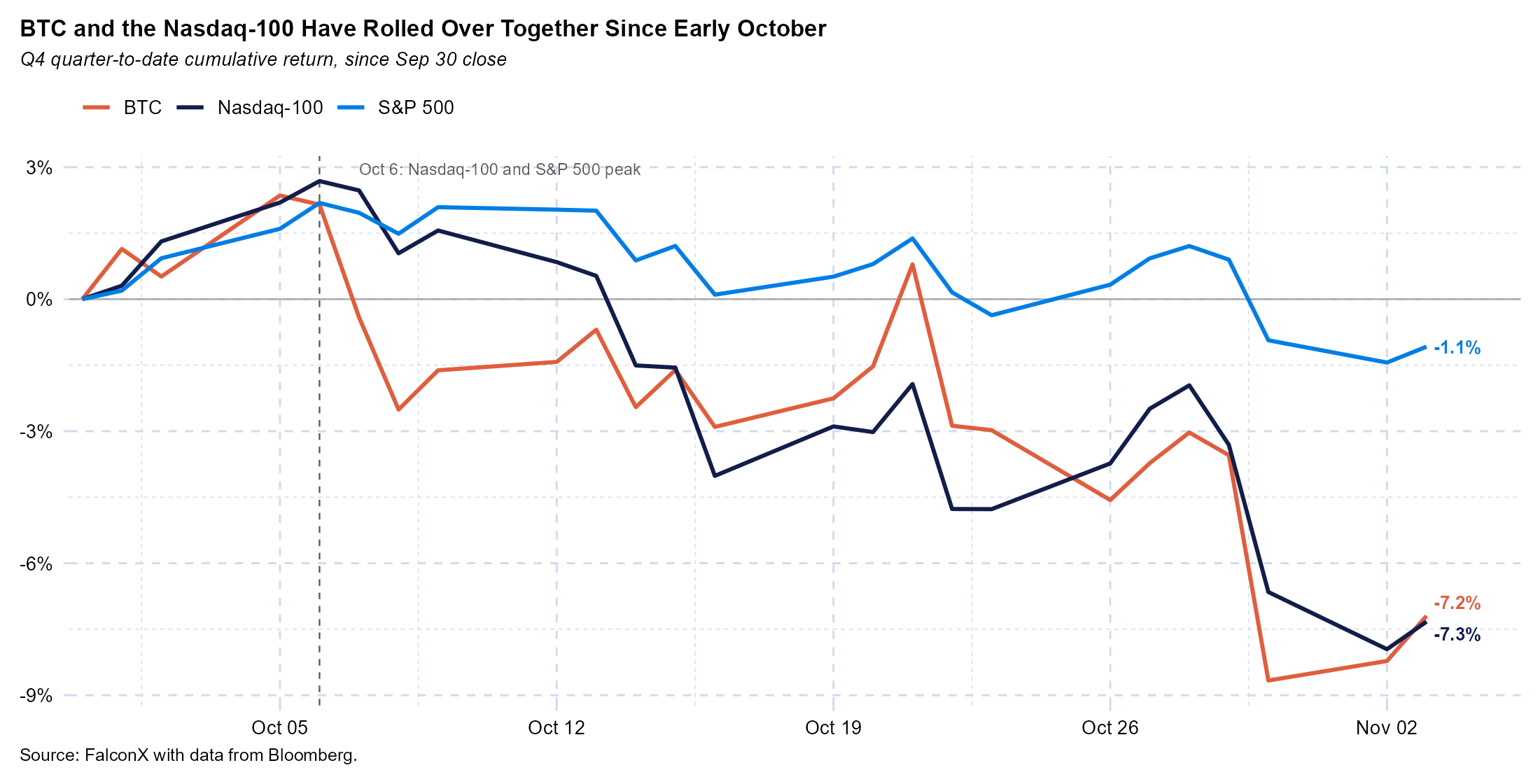
Risk assets have fallen in lockstep since early October, in part reflecting concerns over AI capex that may be fueling expectations for softer growth. BTC hit a local high on Oct 4 ($86.5K) while the Nasdaq-100 and S&P 500 topped (ATHs) on Oct 6. From Oct 6 through the Nov 3 close, BTC is -9.6%, the Nasdaq-100 -9.8%, the S&P 500 -3.2% and semiconductors (SOX) -19.8%, per data from Bloomberg.
A couple of catalysts may be behind some of the crypto weakness. Rising cyber concerns from improved AI capabilities may be weighing on sentiment, while expectations for moderating crypto purchases from digital asset treasury companies (DATs) may be dampening flows. BitMine’s ETH holdings (about 6.06M ETH, 4.96% of supply, per its latest SEC filings) are nearly at its 5.0% target, while Strategy and Metaplanet are slated to be removed from MSCI indices with the Nov 30 close.
This coincided with derisking into the Oct 28 FOMC event. Moreover, gold broke under $4K (now $3,930, -5.6% since Oct 6), pressuring the debasement narrative that had lifted it and BTC in August.
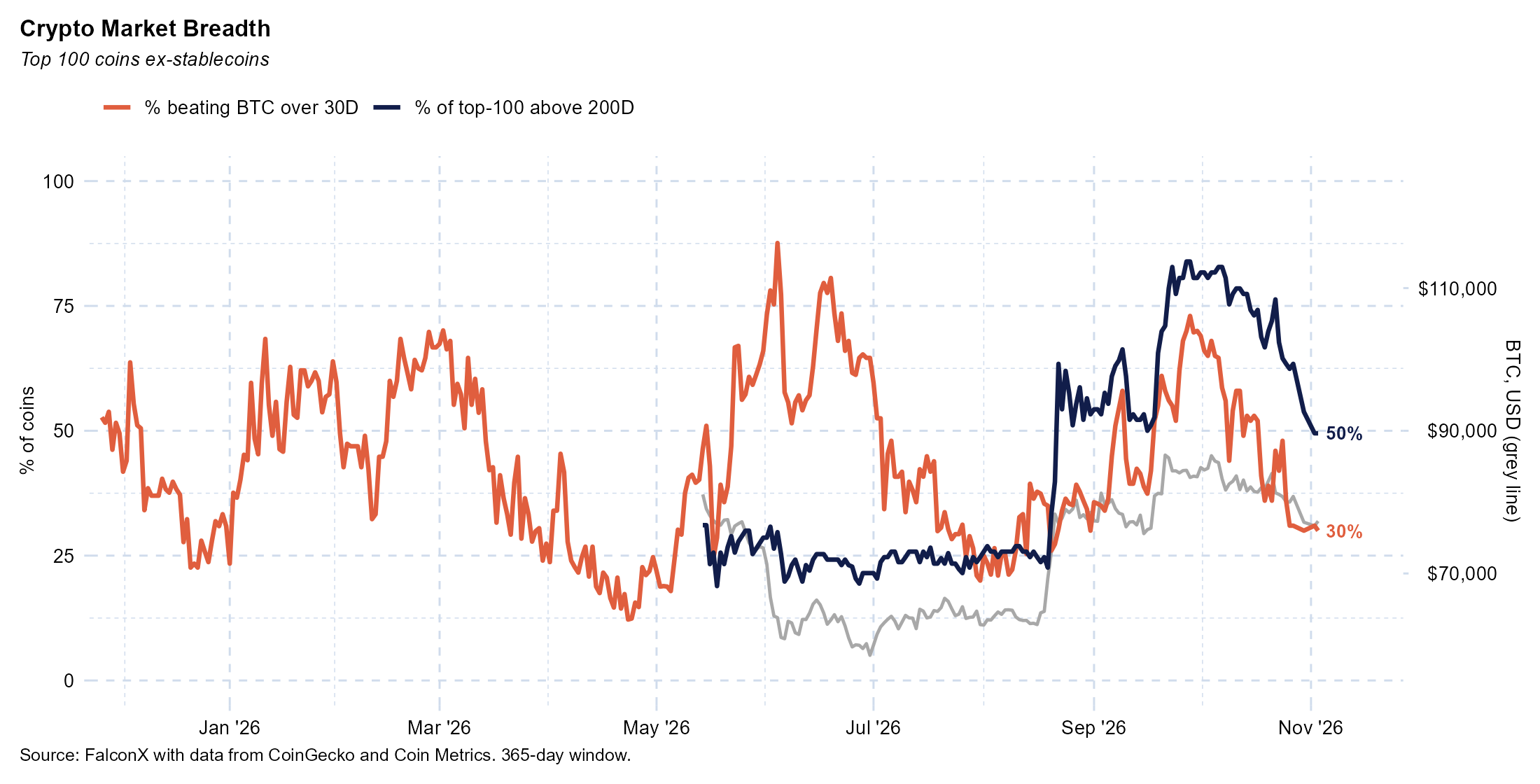
Crypto market breadth is also weakening, with the share of the top 100 cryptocurrencies ex-stablecoins above their 200D moving average declining to 50% vs 80%+ in October. The share of the same cohort outperforming BTC over the trailing 30D declined to 30%, from ~70% a few weeks ago. It signals a risk-off regime shift is well underway and compares to ~20% before the August rally.
BTC Becomes a Nasdaq Proxy
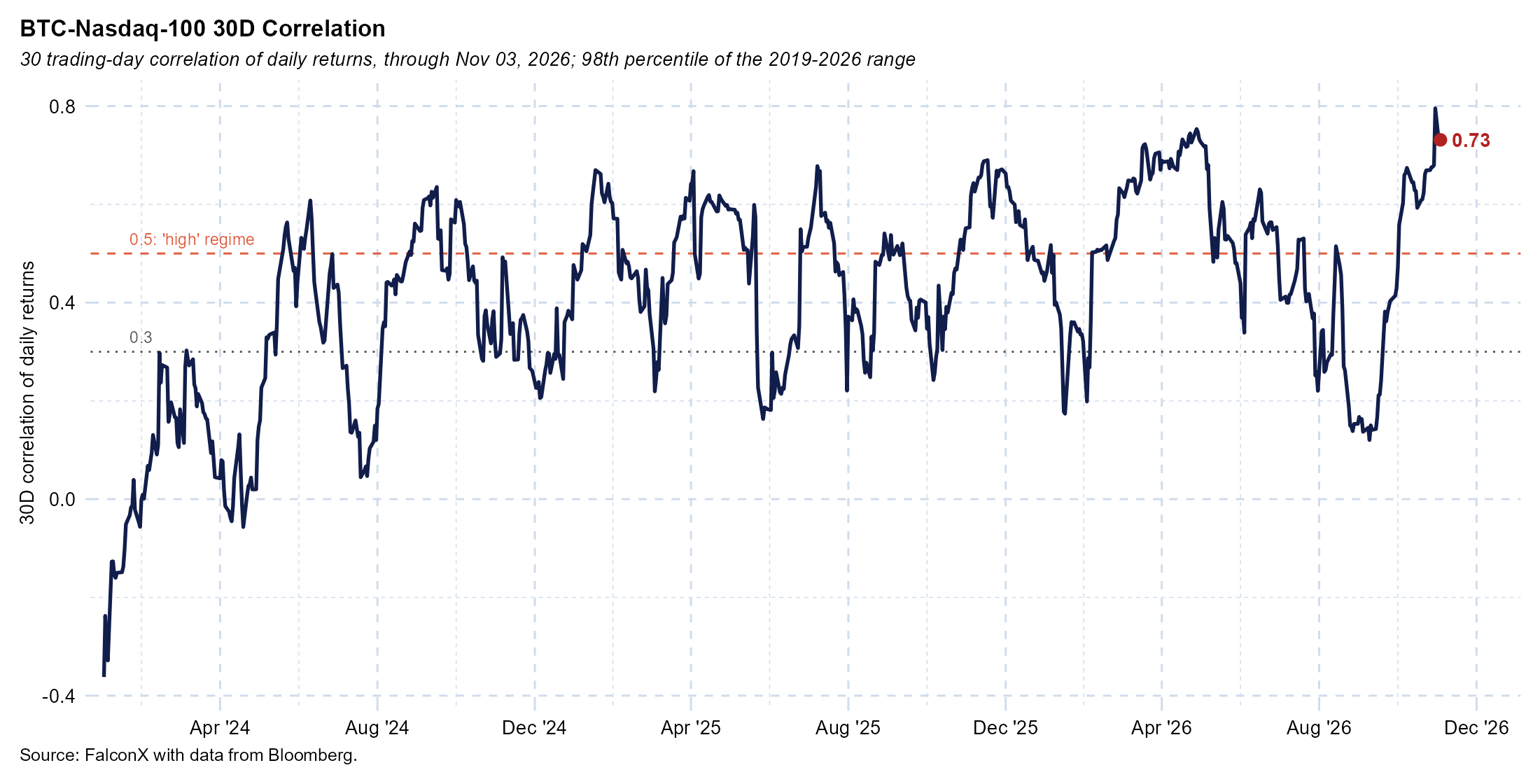
After showing relative strength and decoupling from equities in Q3, BTC’s 30D correlation with the Nasdaq-100 has climbed to 0.73 (through Nov 3; it reached 0.80 on Oct 30), up from 0.12 in early September and in the 98th percentile of its 2019-2026 range. For context, readings were at similarly elevated levels only a few times since 2024, including the April 2025 tariff selloff (0.67) and the selloff around the Iran conflict in 1Q26 (0.72).
If this trend continues, it suggests near-term BTC direction is poised to take cues from the AI trade (as the current earnings season and Anthropic developments shape sentiment) as well as the Dec 9 Fed meeting, with credit and liquidity conditions a barometer of whether the environment for tech companies is improving.
Macro: Yields Fall, but Credit Spreads and Oil Rise
Diverging market conditions may also be pushing crypto into risk-off mode. Treasury yields have come down over the past few weeks, with the 10Y nominal yield 34 bps lower from its Oct 5 high (5.30%) to 4.96%. Falling real yields have typically supported BTC, but it appears the move in rates may reflect growth concerns rather than easier financial conditions, considering rising oil prices (WTI +7.4% since Oct 6) and widening credit spreads.
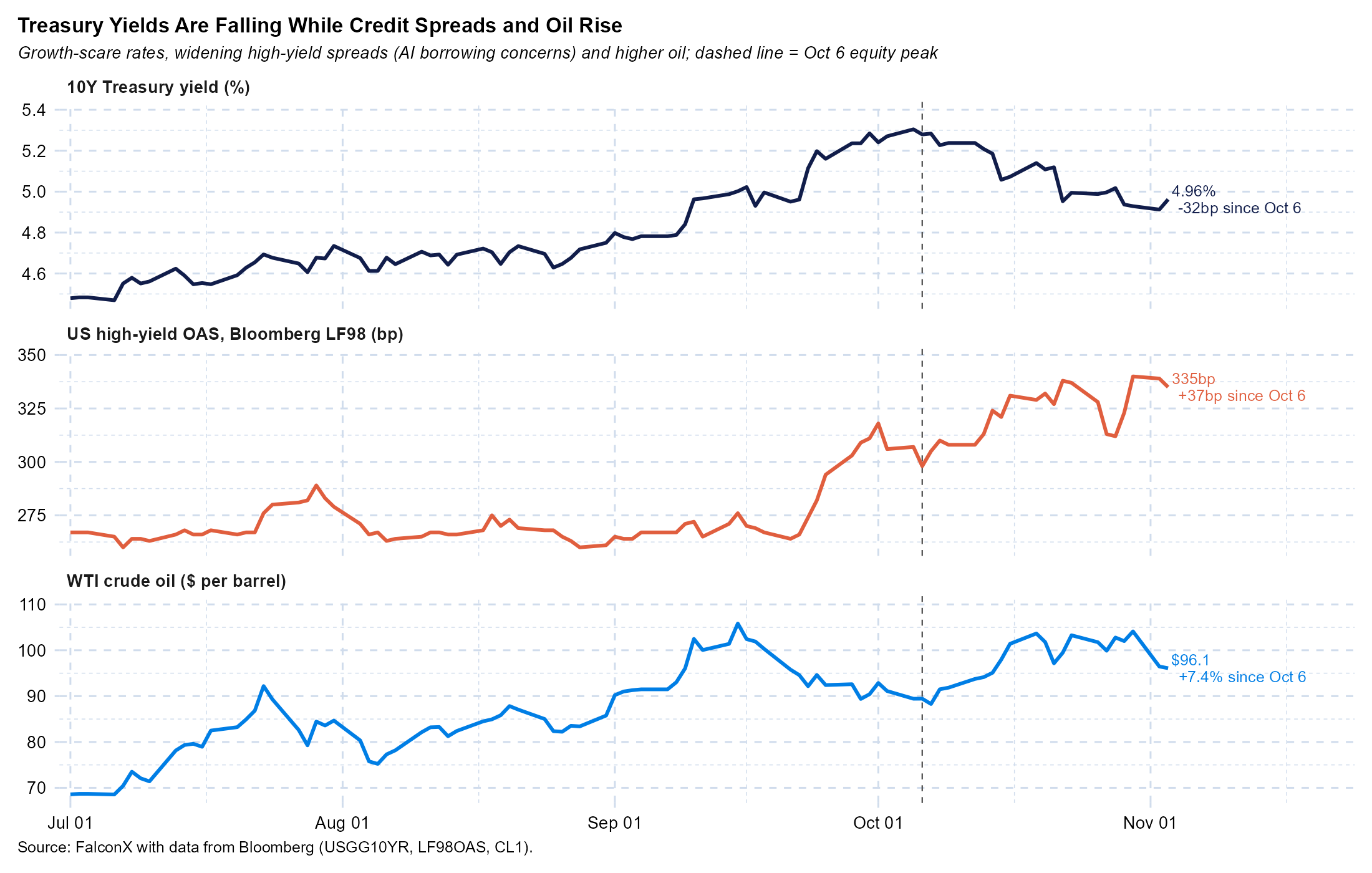
For example, the Bloomberg US Corporate High Yield Average OAS has widened 37 bps since Oct 6 to 335 bps as of Nov 3, hitting a 17-month high on Oct 30. The move points to investors demanding more compensation for AI-related borrowing and coincides with the selloff in semiconductors.
BTC Holds Key Levels as Crypto ETF Outflows Accelerate
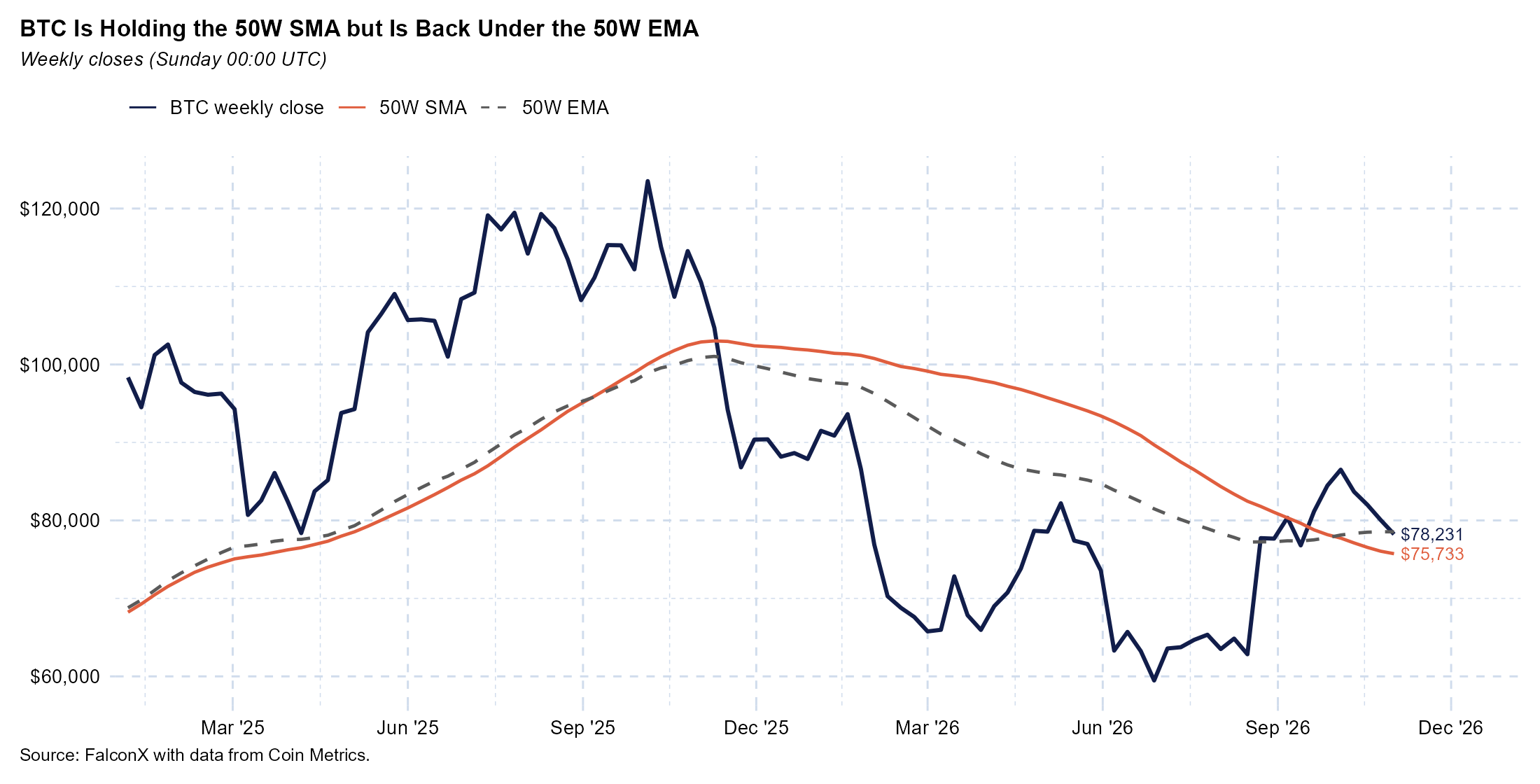
BTC reclaimed the 50W EMA in the week of Aug 23 ($77.7K close) and the 50W SMA in the week of Sep 20 ($81.2K close), after 44 weeks below it. As of Nov 3, it remains 2.1% above the SMA ($75.7K) but back under the EMA ($78.5K, 1.5% below). Market participants may look to the 50W SMA as an important line to hold to prevent falling into a bearish regime (since 2019, a weekly close below the 50W SMA has been followed by a median 13-week return of -1.9%). Breaking under it may bring the 200W SMA into focus as the next level of support ($67.5K).
On the other hand, ETH and SOL both recently crossed under their 50W SMAs ($2.3K and $97, respectively). The moves may reflect the relatively greater outflows in their respective ETFs (for the week of Oct 26-30, ETH and SOL ETFs saw $432M and $71M of outflows, ETH’s outflow is about 3.3% of its ETF assets). ETH ETF flows are now more negative for the year (-$265M) vs BTC ETFs (-$87M), suggesting a sharper break in direction. October saw the largest-ever monthly outflows for ETH ETFs (-$1.6B).
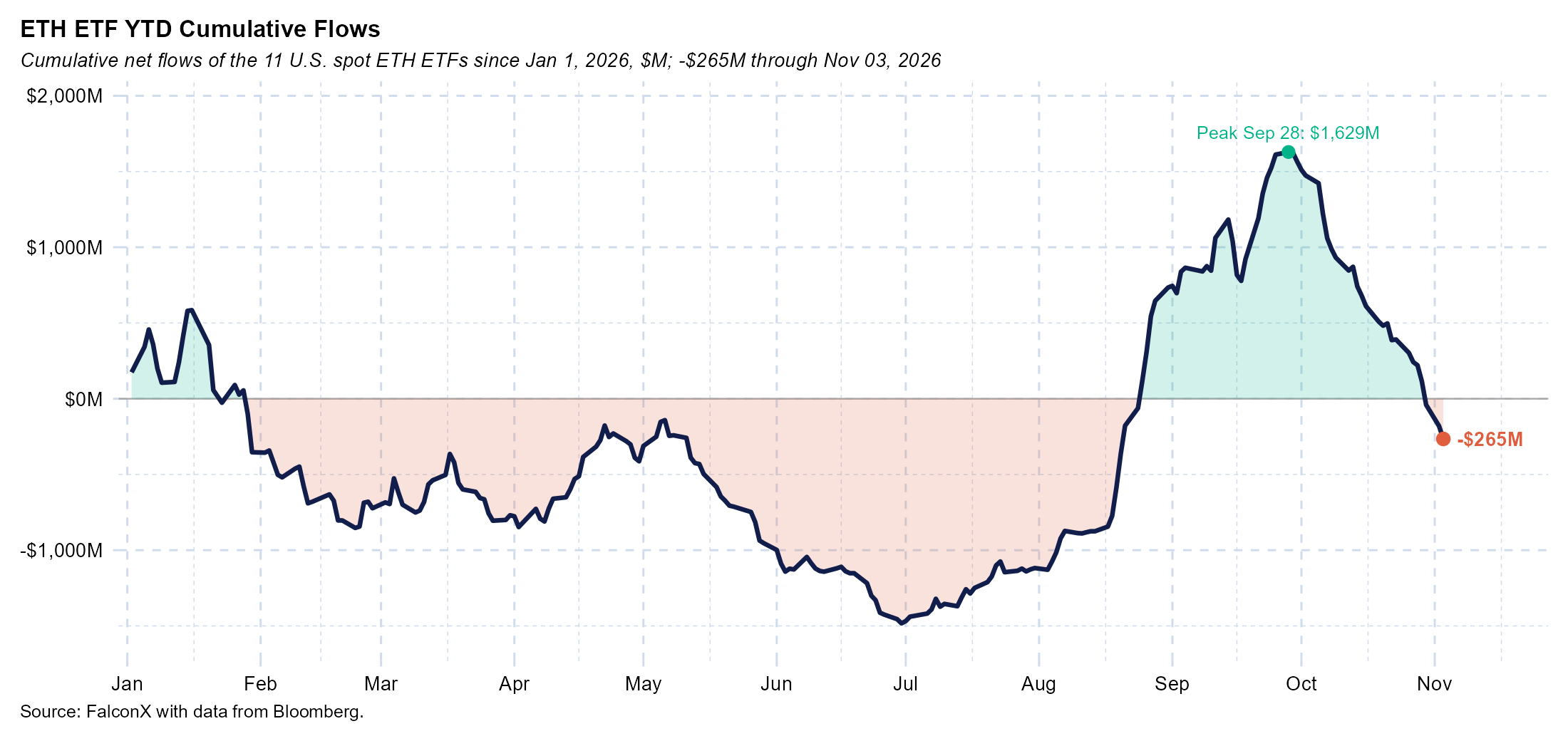
Outflows have continued into November, with BTC and ETH ETFs seeing $514M and $225M of outflows MTD through Nov 3, per data from Bloomberg, while SOL ETF flows were flat.
On-Chain Liquidity Is Compressing
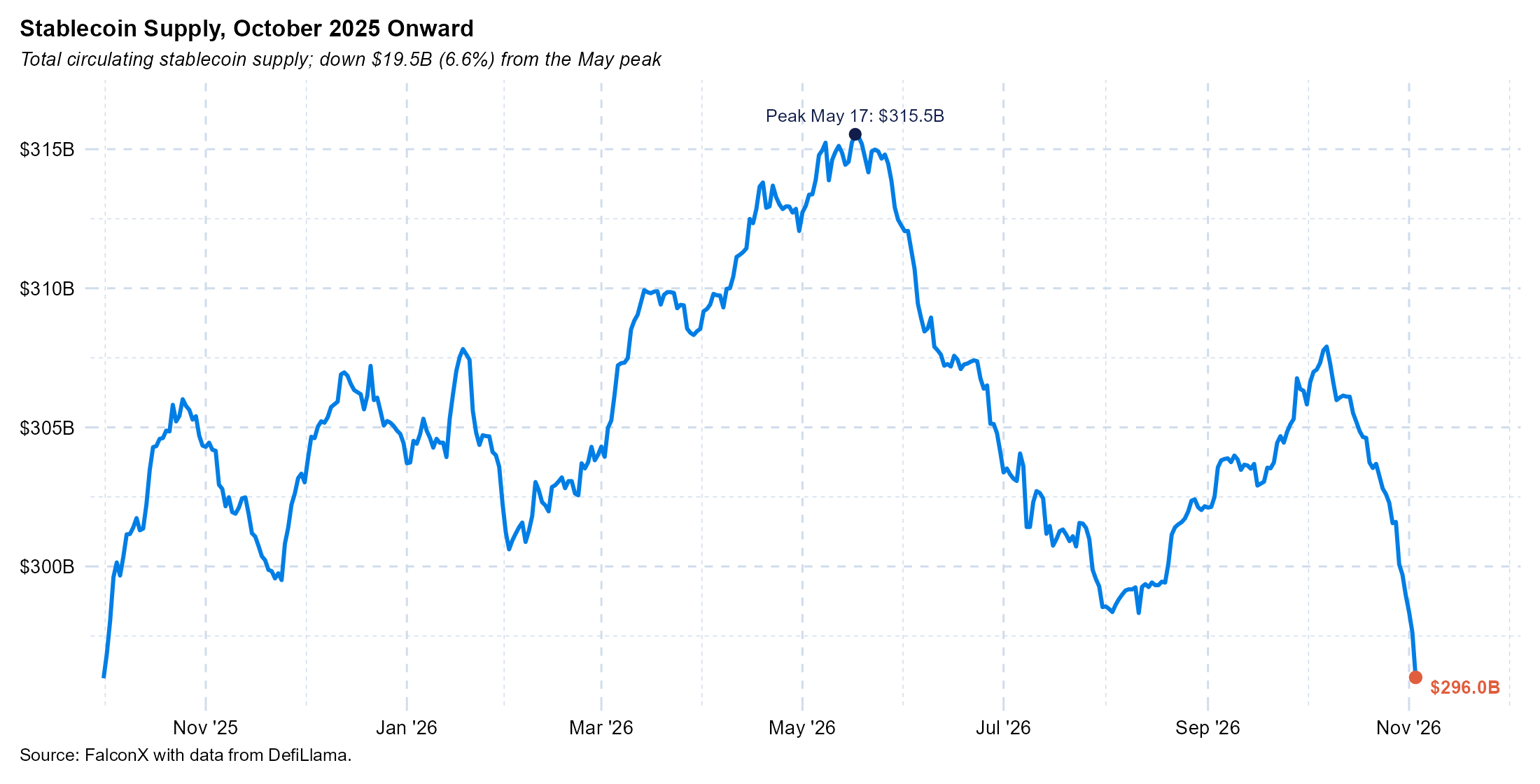
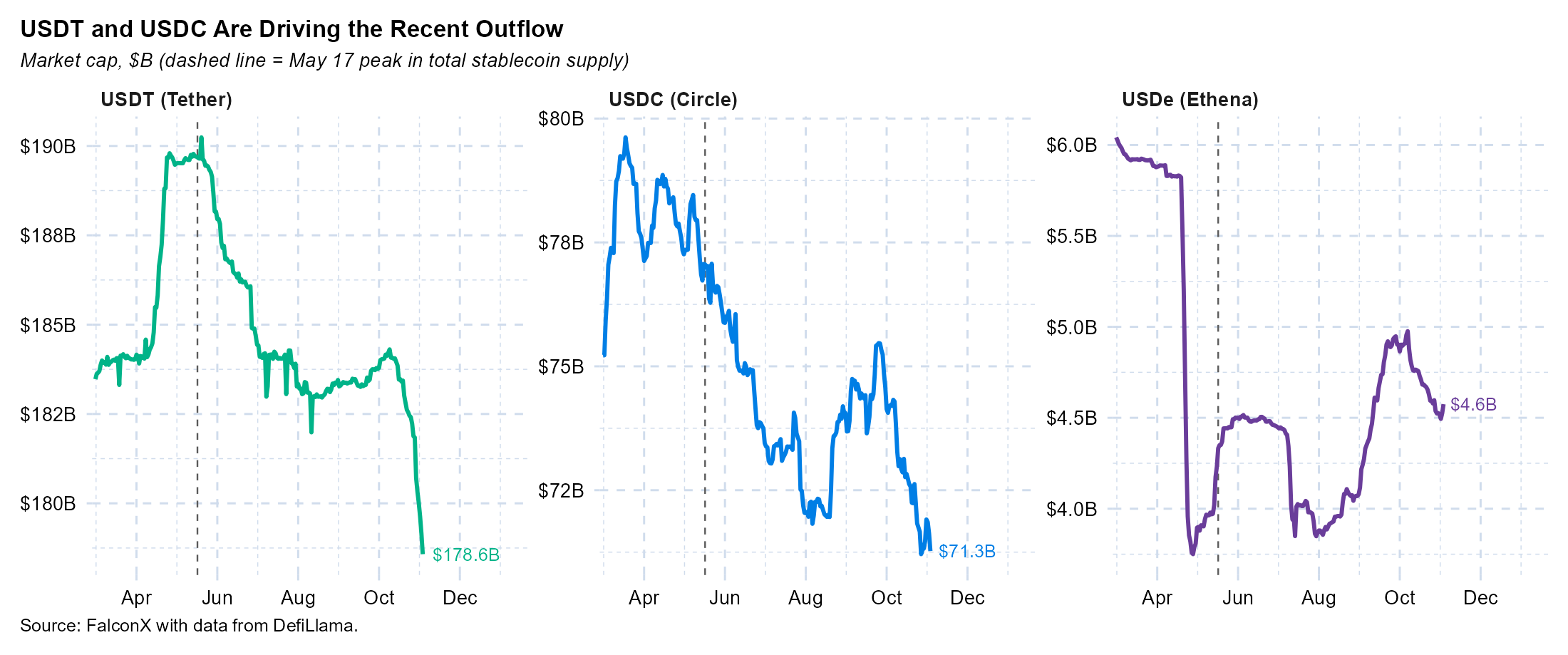
Stablecoin supply has declined to its lowest point in the last 13 months ($296B as of Nov 3), suggesting capital is moving out of the crypto space. 30D outflows of $11.1B as of Nov 3 were broad-based across stablecoins and driven by USDT ($5.5B) and USDC ($3.0B).
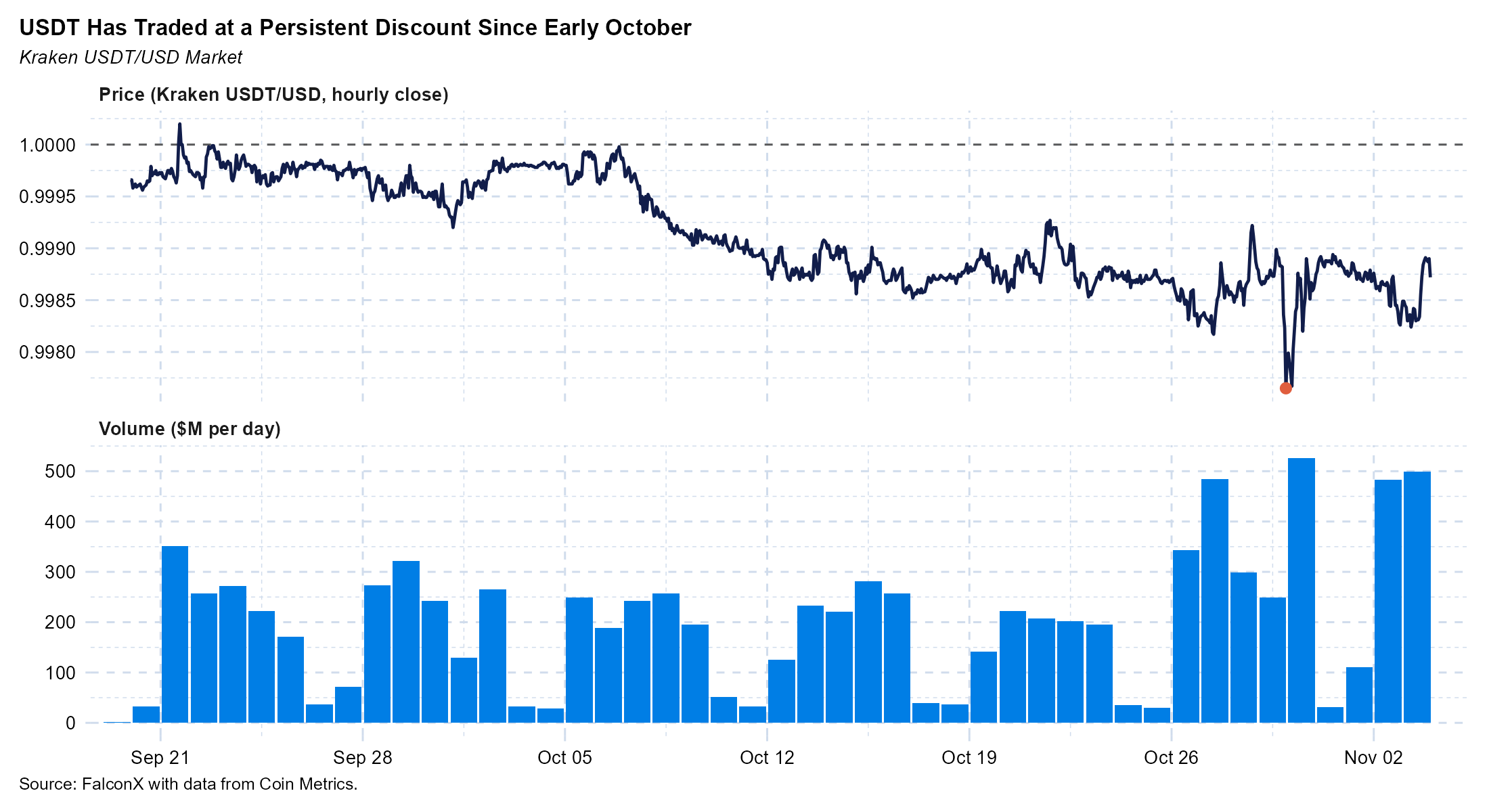
This also coincides with a compression in the USDT/USD exchange rate (currently around 0.9985, a 15 bp discount on a 24-hour average basis, on Kraken, the most liquid USDT/USD market in our data), which started to slip in early October as weakness in crypto and traditional markets emerged. It’s a sign of potential stress, as it indicates participants are moving more aggressively into cash, while market makers may not be bidding the gap.
The discount opened around Oct 7, widened to its widest reading of the past year, -23.5 bps (hourly, Oct 29, the Binance exploit), and has been below -10 bps on 22 of the last 30 days. Notably, trading in the market is rising with it. Kraken USDT/USD volume averaged $314M a day over the past week vs $185M over the prior 30 days, suggesting sustained outflows of stablecoins to cash.
BTC Options Activity Also Reads Defensive
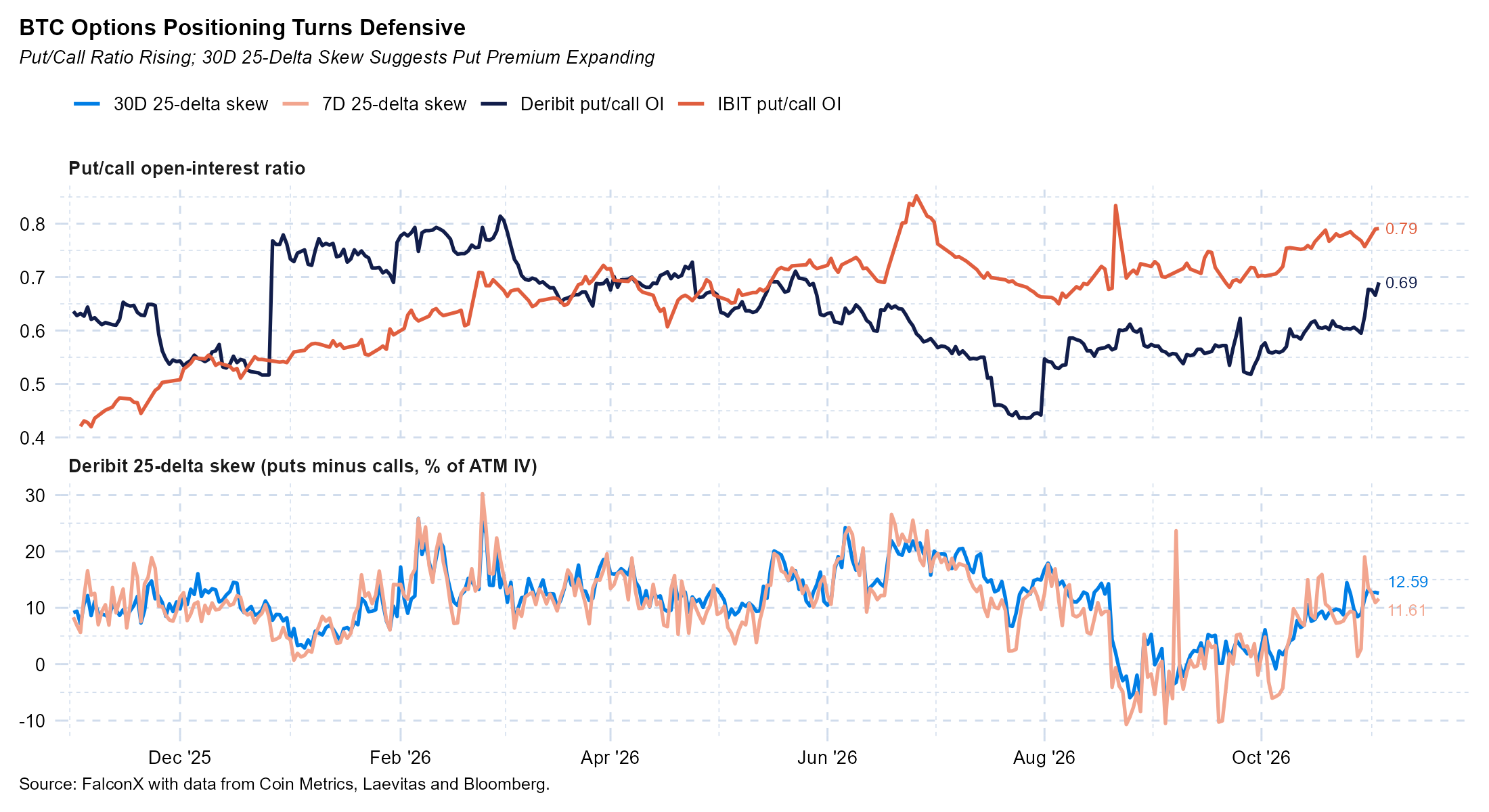
Deribit put/call open interest has climbed to 0.69 from 0.56 a month ago, though it is only in the 73rd percentile of its 1-year range. IBIT put/call is 0.79 (0.71 a month ago, 96th percentile). The 25-delta put skew shows puts pricing rich to calls, with 30D skew at 12.6 (vs 8.9 a week ago) and 7D skew at 11.6 (from 2.7 a week ago), suggesting a pivot to more aggressive downside positioning at short tenors.
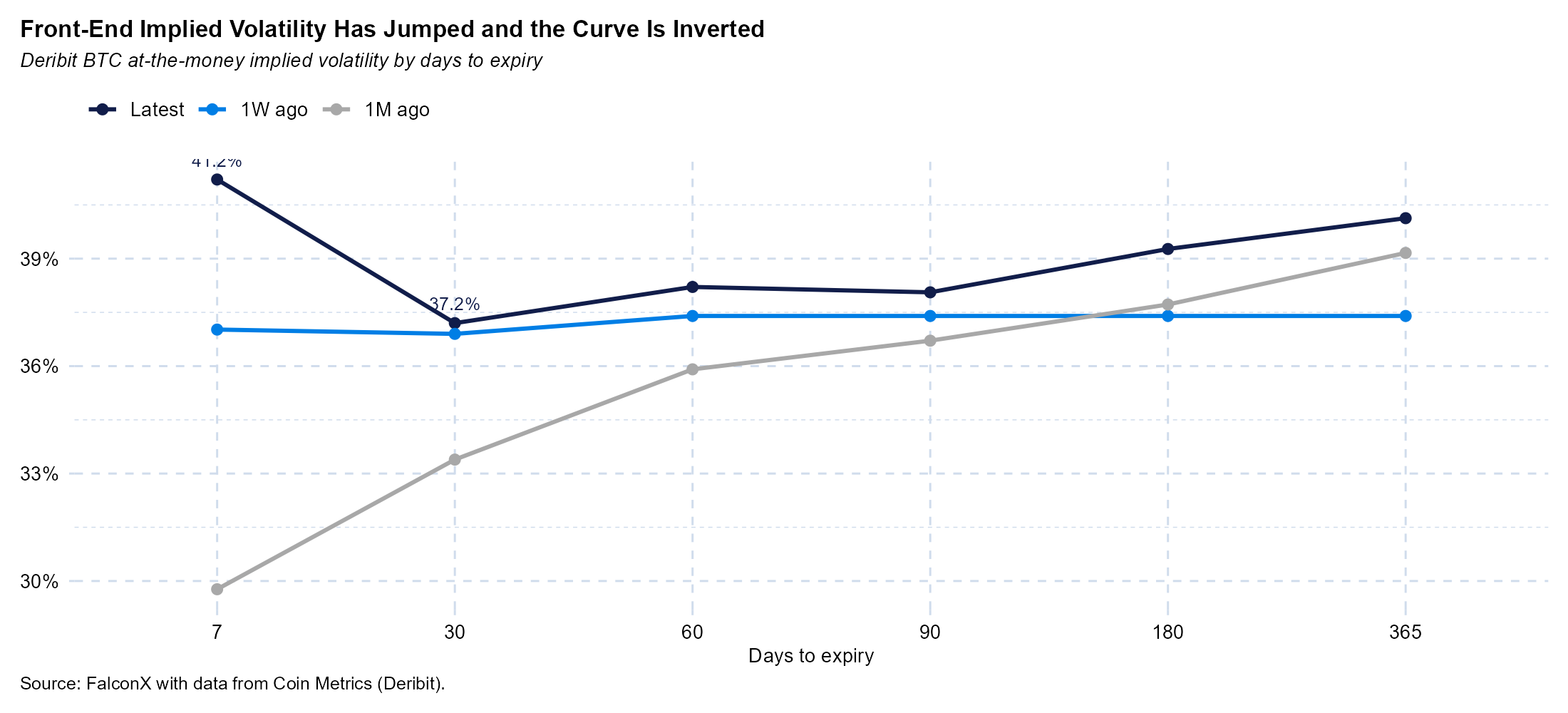
The term structure also points to rising expectations for a move in the short term: 7D ATM implied volatility is 41.2% vs 29.8% a month ago and now sits above the 30D (37.2%). The inverted front end potentially reflects expectations for immediate catalysts (cyber events, AI developments, reaction to midterm results).
Divergence in BTC Futures Positioning
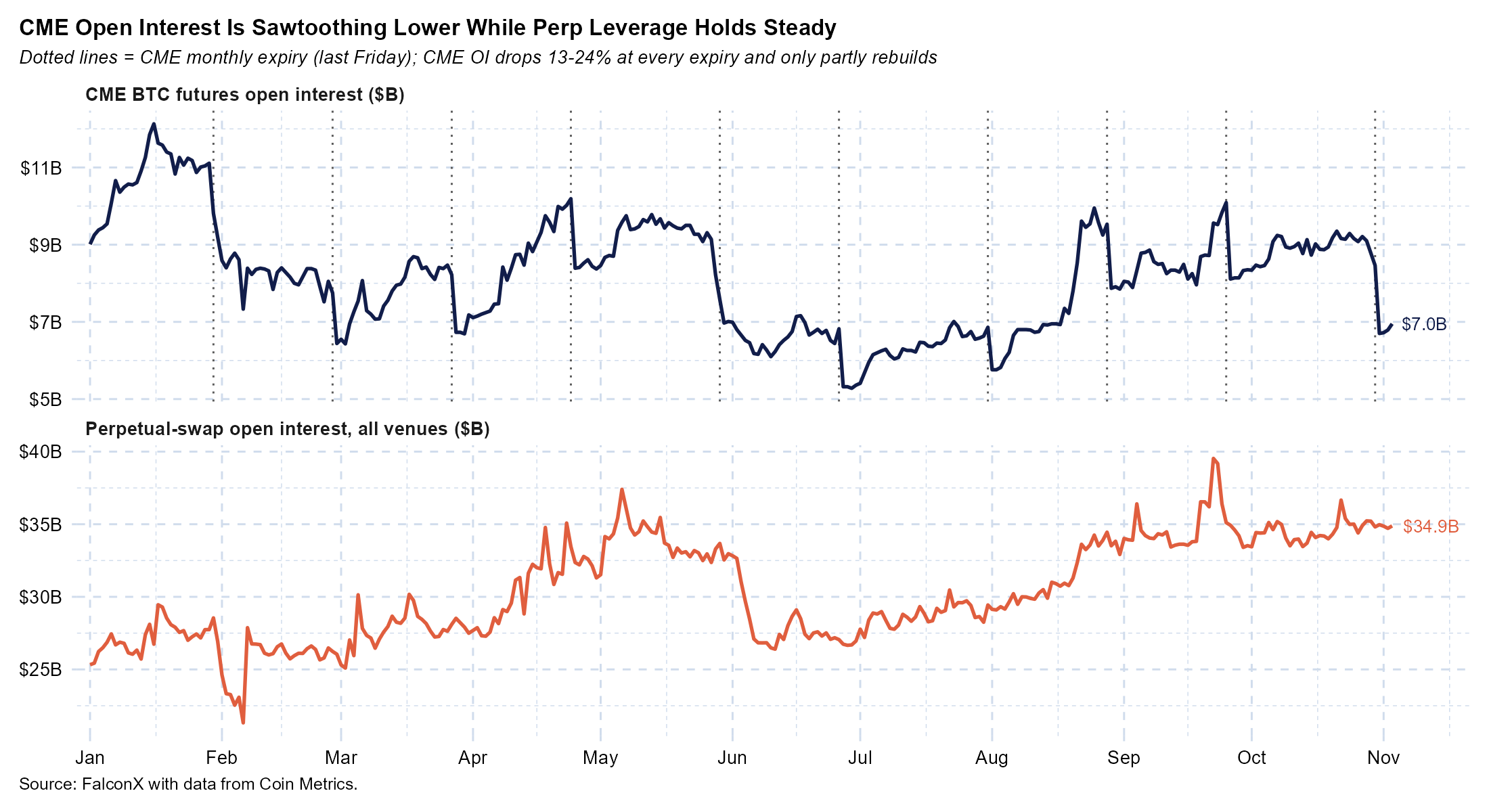
Aggregate BTC futures open interest (OI) is $43.7B, down 4.5% since equity indices topped Oct 6, but the composition has changed: CME open interest is $6.95B vs $9.08B (-23%), while perp open interest across venues is flat at $34.9B (+0.7%). Regulated, institutional futures exposure is shrinking while offshore perpetual leverage is not.
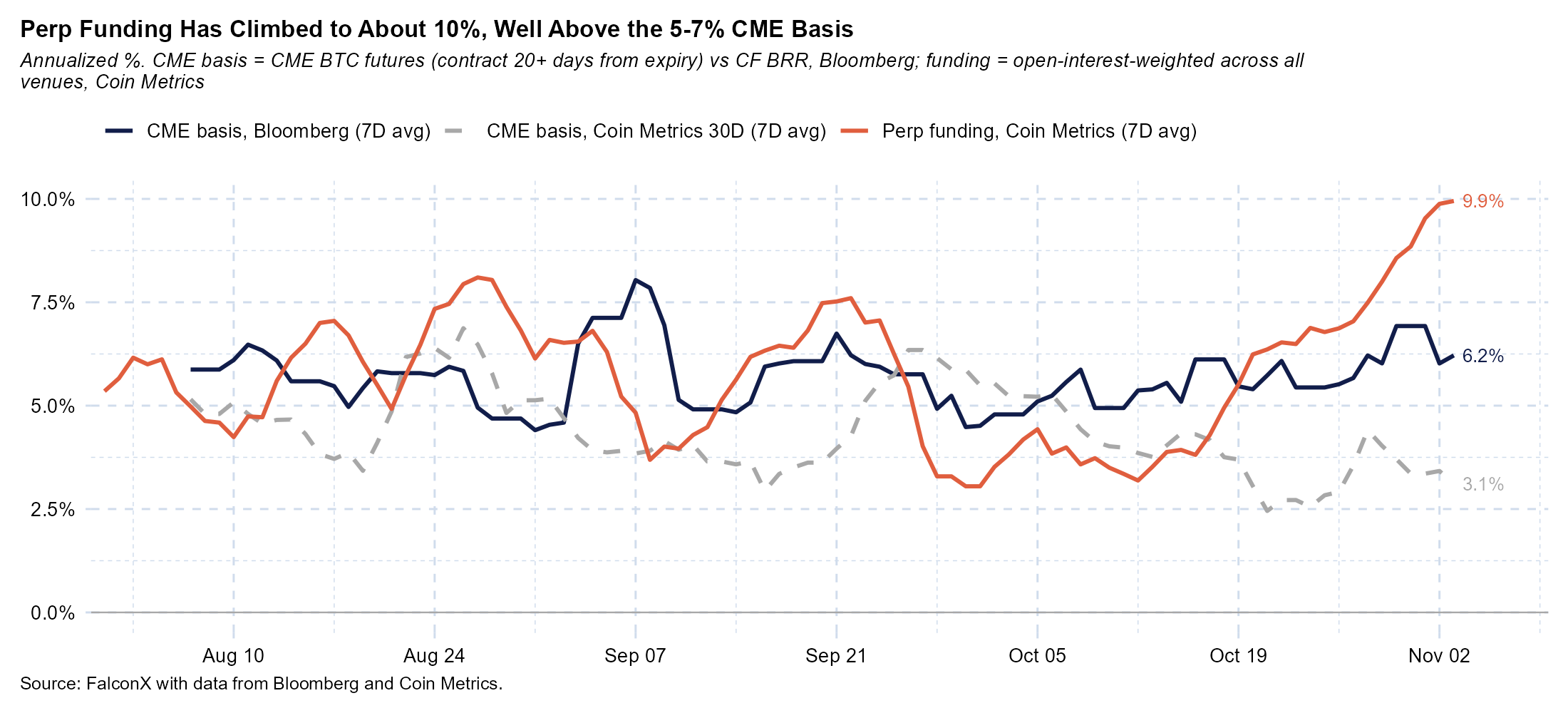
While expiry mechanics could explain the decline (CME OI drops an average of 17% in the day after its monthly expiry, and the Oct 30 expiry saw OI decline 24%), rising perp funding may also be a factor. CME basis has declined to roughly 3% annualized, per data from Coin Metrics, while BTC perp funding across venues has climbed from mid-October to nearly 10%, suggesting positioning is normalizing to the 11% baseline, and indicating carry now pays more on perps than on CME. It may indicate that perps traders are turning more bullish on BTC than institutional participants on CME. Sticky perps positioning, however, may raise the risk of a leveraged flush.
Takeaways
BTC is trading more in line with equities following the selloff over the past few weeks, so market reaction to AI developments may continue to determine its near-term direction. Crypto ETF outflows over the past few weeks signal derisking, while shrinking stablecoin supply indicates on-chain liquidity contraction. Despite the softer conditions, BTC is hanging on to its 50W SMA, showing relative strength vs peers ETH and SOL, which lost that level.
This material is for informational purposes only and is only intended for sophisticated or institutional investors. Neither FalconX Limited, FalconX Bravo, Inc., FalconX Delta, Inc., FalconX Golf Pte Ltd., Solios, Inc., Falcon Labs S. DE. R. L., KestrelX, Ltd., KingfisherX Limited, nor Banzai Pipeline Limited service retail counterparties, and the information in this material is NOT intended for retail investors. This material is not (i) an offer, or solicitation of an offer, to invest in, or to buy or sell, any interests or shares, or to participate in any investment or trading strategy, (ii) intended to provide accounting, legal, or tax advice, or investment recommendations, or (iii) an official statement of FalconX or any of its affiliates. Any information contained in this material is not and should not be regarded as investment advice, investment research, debt research, or derivatives research for the purposes of the rules of the CFTC, the Securities and Exchange Commission, or any other relevant regulatory body.
No discussion of a particular company or product shall be considered an endorsement of such company or product. Past performance is not indicative of future results. FalconX, and its affiliated parties, including 21shares, may hold positions in, act as a market maker for, or otherwise have a financial interest in, assets discussed herein, and may benefit from any price movements or transactions involving the subject company. This may change without notice.
Prior to entering into any proposed transaction, recipients should determine, in consultation with their own investment, legal, tax, regulatory and accounting advisors, the economic risks and merits, as well as the legal, tax, regulatory and accounting characteristics and consequences of the transaction. Pursuant to the Dodd-Frank Act, over the counter derivatives are only permitted to be traded by "eligible contract participants" (“ECP”s) as defined under Section 1a(18) of the CEA (7 U.S.C. § 1a(18)). Do not consider derivatives or structured products unless you are an ECP and fully understand and are willing to assume the risks.
Solios, Inc. and FalconX Delta, Inc. are registered as federal money services businesses with FinCEN. FalconX Bravo, Inc. is registered as a Swap Dealer with the U.S. Commodity Futures Trading Commission and is a member of the National Futures Association. FalconX Limited, FalconX Bravo, Inc., FalconX Delta, Inc., Falcon Labs S. DE. R. L., and Solios, Inc. are not registered with the Securities & Exchange Commission or the Financial Industry Regulatory Authority. FalconX Golf Pte. Ltd. is not registered or licensed by the Monetary Authority of Singapore (MAS). FalconX Limited is licensed by the MFSA as a Class 2 Crypto-Asset Service Provider (Regulation (EU) 2023/1114). It is also licensed as a Financial Institution (Cap. 376) exclusively for EMT payment services. FalconX is not a registered broker-dealer with the U.S. SEC or a member of the Financial Industry Regulatory Authority (FINRA). FalconX’s ability to offer trading in tokenized stocks and other products mentioned herein may be restricted in certain jurisdictions.
"FalconX" is a marketing name for the FalconX Group and its affiliates. Availability of products and services is subject to jurisdictional limitations and capabilities of each FalconX entity. For information about which legal entities offer trading products and services, or if you are considering entering into a derivatives transaction, please reach out to your Sales or Trading representative.