Pearl: The BTC Fork Secured by AI Compute
Pearl's 'Proof of Useful Work' ties its consensus mechanism to matrix multiplication common in AI inference.


Investing in digital assets or tokenized equities, and their respective derivatives, involves a substantial degree of risk. Market prices can be highly volatile and unpredictable. Movements in the market can result in significant, rapid, and potentially total loss of your invested capital. Before allocating capital, you should carefully evaluate whether such investments align with your financial situation, experience, and risk tolerance. For further information regarding potential risks, please refer to the disclaimer below.
Pearl Network (PEARL) is the latest Bitcoin-like cryptocurrency making waves in the industry. Its fixed tokenomics stand to bucket it as a potential Store of Value (SoV), while its ties to the AI sector (proof of inference and training) may align it with growing agentic activity.
Underlying it all is the thesis that Pearl could challenge BTC as an improved SoV, because its consensus mechanism is a function of verifiable, and potentially useful, inference work. The total addressable compute for AI is also considered larger and faster-growing than the addressable compute for BTC, giving Pearl a potentially bigger pool of possible miners it can onboard to the network.
Pearl was reportedly one of the most discussed tokens at the Token2049 conference in Singapore, demonstrating rising interest in the relatively new token. In this piece, we examine PEARL’s traction relative to other tokens that exhibit similar properties and explore PEARL’s upcoming catalysts.
Overview of Pearl
Pearl is a Bitcoin fork that targets block times of 194 seconds (vs BTC’s ~10 minutes). It has a supply cap of 2.1B PEARL tokens vs BTC’s 21M. Instead of halvings, emissions are front-loaded to its early years, and PEARL rewards decline with each block.
The protocol utilizes Proof of Useful Work (PoUW) for consensus. This replaces BTC’s hashing with matrix multiplication, which is run on GPUs and occurs in AI workloads. Miners produce cheaply verifiable proofs (zk-SNARKs) that the matrix multiplication successfully occurred. The idea is that miners are already running AI workloads on their hardware and mine PEARL on top, enabling the network to be backed by compute that is already being used for something else. Moreover, mining PEARL on top of existing paid AI workloads makes the mining effectively free.
The AI Link – What the Market is Paying For
For GPU owners already serving inference, mining PEARL is supplemental income (with minimal impact to latency and performance) and in theory secures the network through proof of useful work, assuming the inference jobs miners are serving concurrently are real and economical. This compares to BTC where miners use ASICs dedicated to BTC mining and can’t be used for other use cases.
However, at this point, and based on published research, it appears that mining may be finessed, with miners found to not necessarily be running real AI inference loads to mine PEARL. Pearl’s future updates aim in part to close these loopholes.
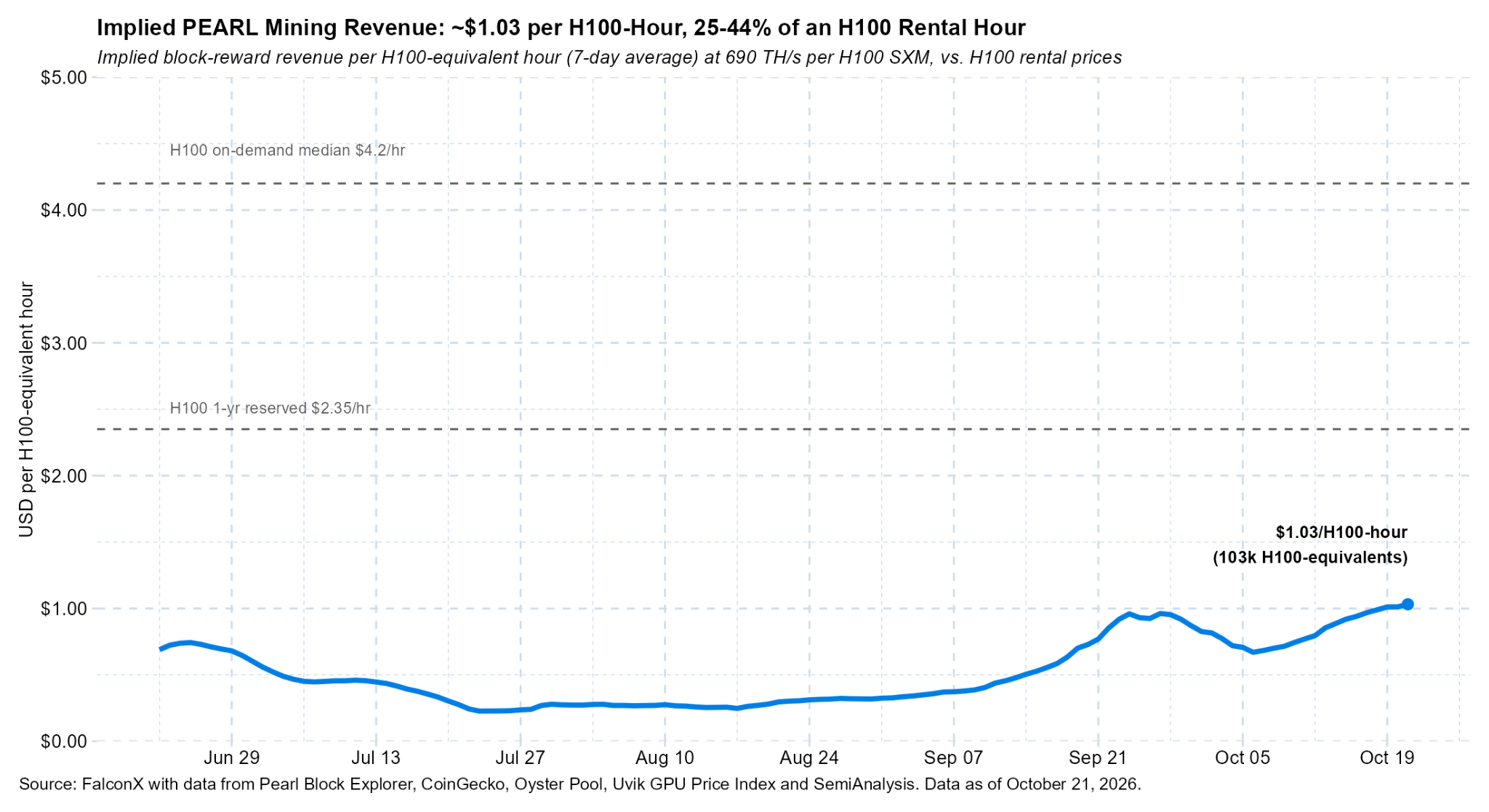
The economics may appear attractive for GPU owners. At current levels, block rewards imply roughly $1.03 per H100-equivalent hour (7-day average through Oct 21, at about 690 TH/s per H100 SXM), or about 25-44% of what an H100 rents for ($2.35 reserved to $4.20 on-demand). Note that data center operators are considered to only use reserved pricing, making mining PEARL more economical for them.
Tangible Proof of Concepts
Pearl’s design builds on its founders’ published academic research (Komargodski and Weinstein, April 2025), which showed that proofs over matrix multiplication can add minimal overhead; Pearl has reported measured mining overhead of roughly 1%-5% (workload dependent) on H200 GPUs.
Pearl already has worked with recognizable companies in the AI universe. In May 2026, it partnered with AI infrastructure provider Together AI ($8.3B valuation as of July 2026) on an inference endpoint for Gemma-4-31B-it-pearl, an instruction-tuned model, with the endpoint discounted 25%+ thanks to Together’s PEARL mining. While this endpoint is no longer available on a serverless basis (possibly because the model has been superseded by newer ones), the offering served as an example of how inference providers could benefit by mining PEARL (improving their economics), while Pearl itself sees participation on the network from ‘useful’ AI requests.
Pearl is also a member of the NVIDIA Inception Program, which could benefit it through access to the broader 40,000+ member company network. Pearl says that the program’s membership is ‘largely companies running GPU fleets’, which is Pearl’s target miner audience.
Pearl has also partnered with Attestable ($20M seed round announced August 2026), a firm that focuses on ZK proofs for LLM inference, supporting its goal to prove useful work on the network.
The Store of Value Component
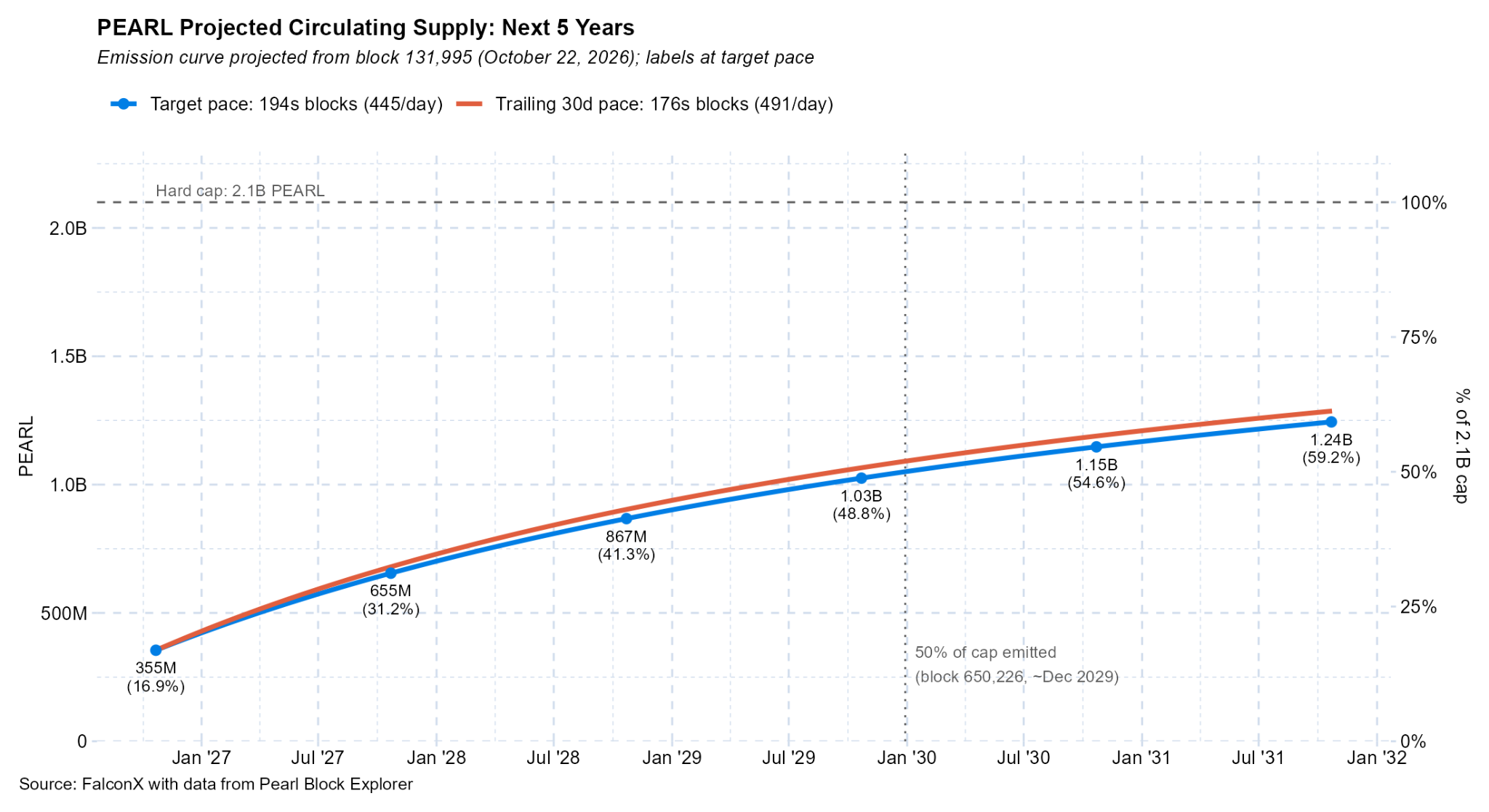
It’s notable that PEARL follows similar tokenomics to BTC. Its ‘fair launch’ rollout, with no token sale, is viewed positively (no token unlock overhang) and may support the case to consider it a store of value (fixed supply/tokenomics and community-owned). At the same time, its supply schedule points to substantial inflation ahead, with $650M+ of PEARL (about 300M tokens) due to enter circulating supply in the next 12 months.
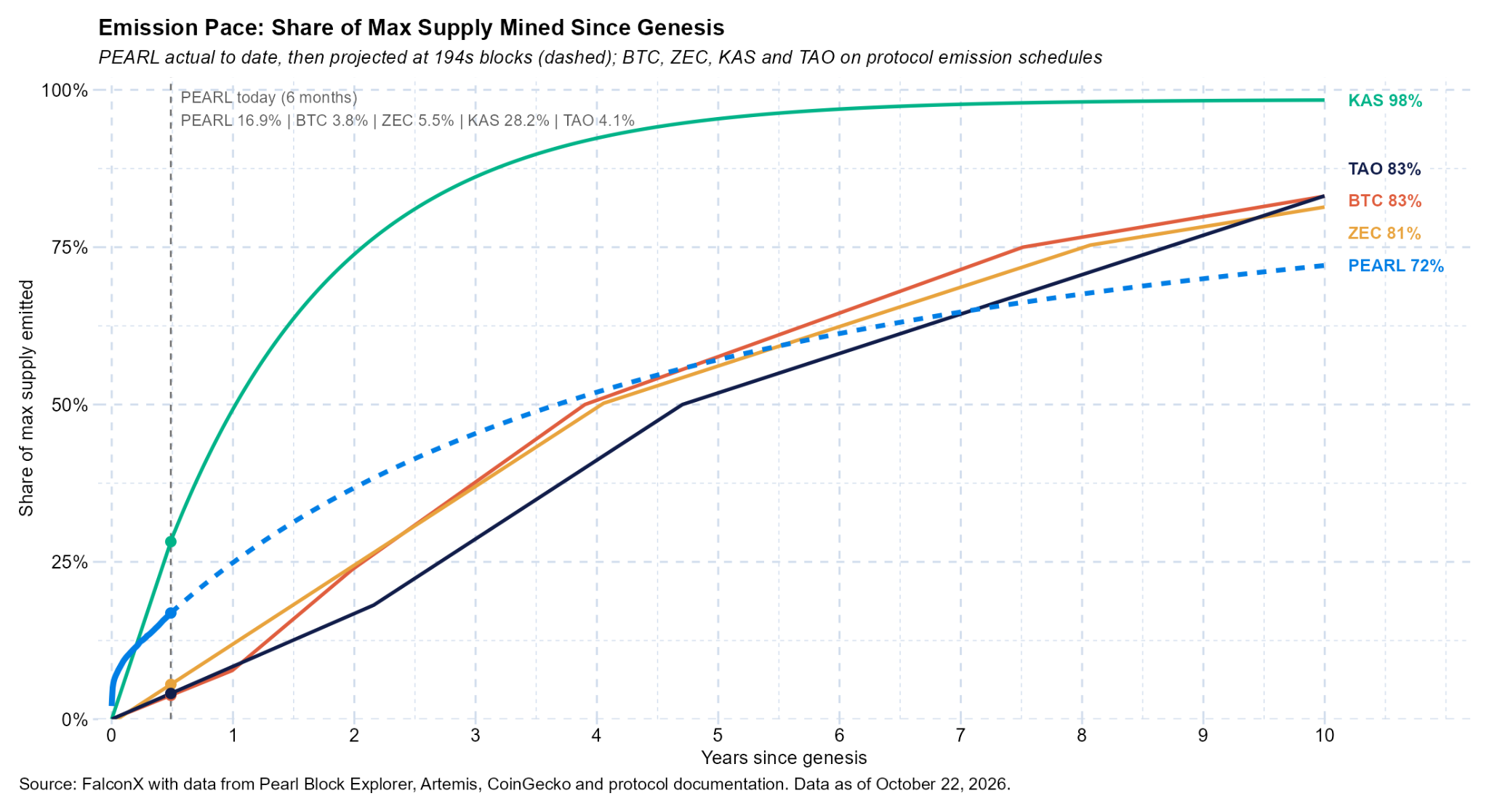
Pearl’s emissions are also front-loaded relative to peers. It has mined 16.9% of its supply (about 354M PEARL) in under six months, versus about 3.8% for BTC, 5.5% for ZEC and 4.1% for TAO at the same age (KAS: 28.2%). Supply is growing above 100% annualized today and slows to roughly 38% annualized a year from now, with no halving cliffs.
Mining Dynamics
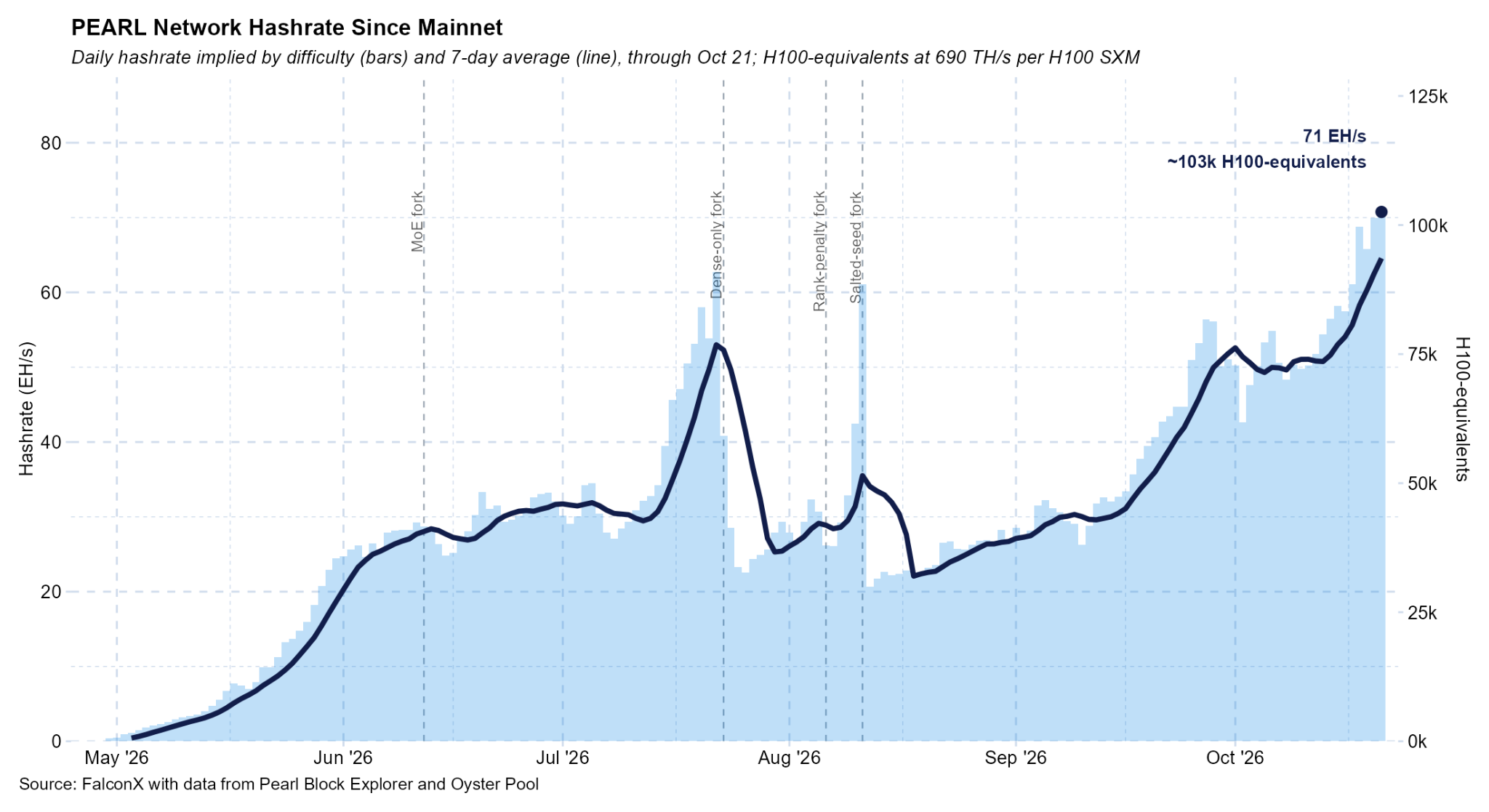
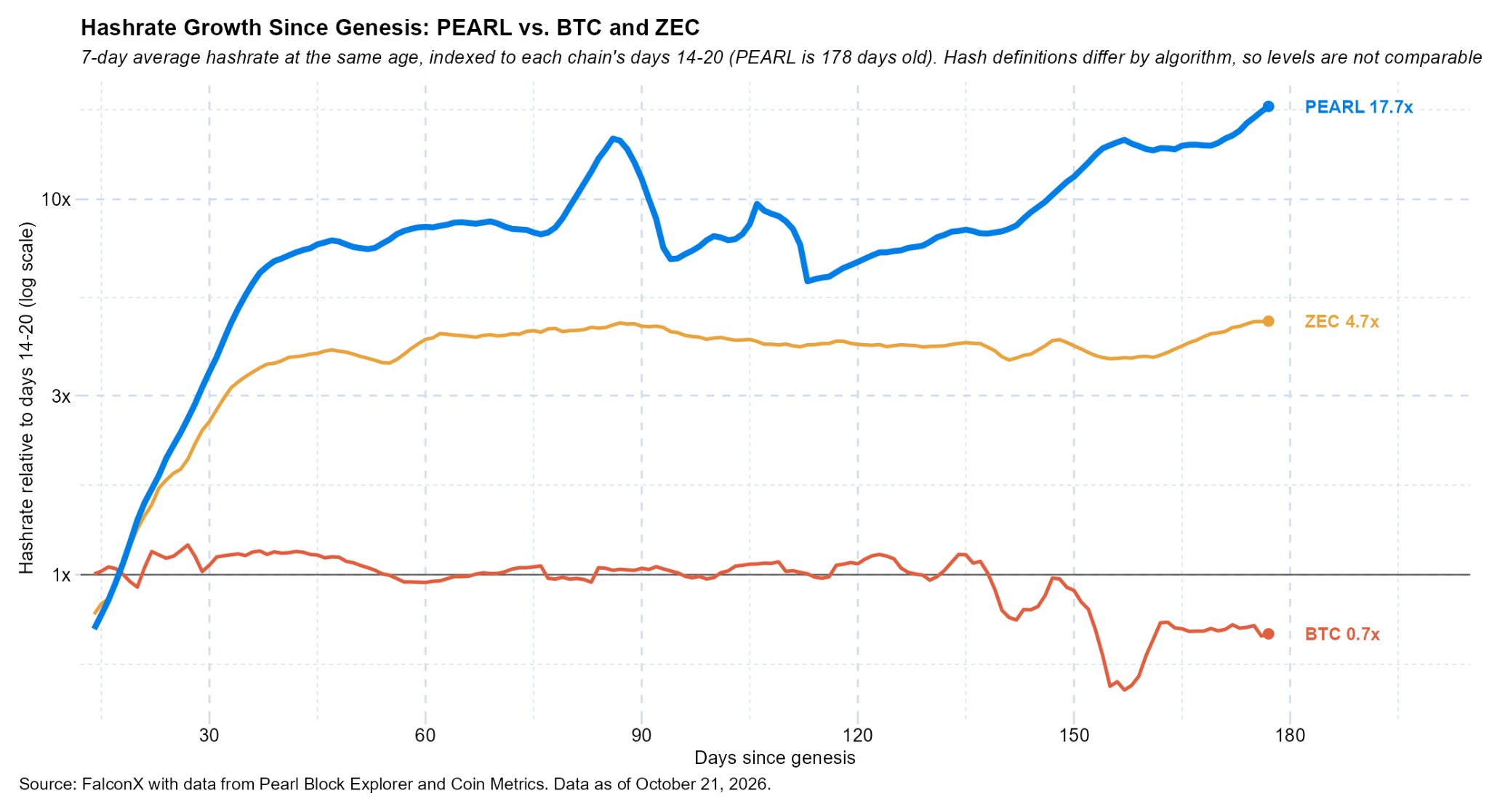
In October, PEARL hashrate exceeded its peak in July, and now totals 71 EH/s, roughly equivalent to the hashrate of 103,000 H100s. Relative to PoW peers ZEC and BTC, Pearl has seen the strongest relative growth in hashrate at 177 days out, with hashrate growing 18X on a 7D average basis relative to its days 14-20 level. Note that H100-equivalents (about 690 TH/s per H100 SXM) measure throughput, so the figure is not an actual GPU count. Hashrate fell by about half after the dense-only fork in late July and dipped again after the rank-penalty and salted-seed forks in August, consistent with those upgrades closing mining shortcuts.
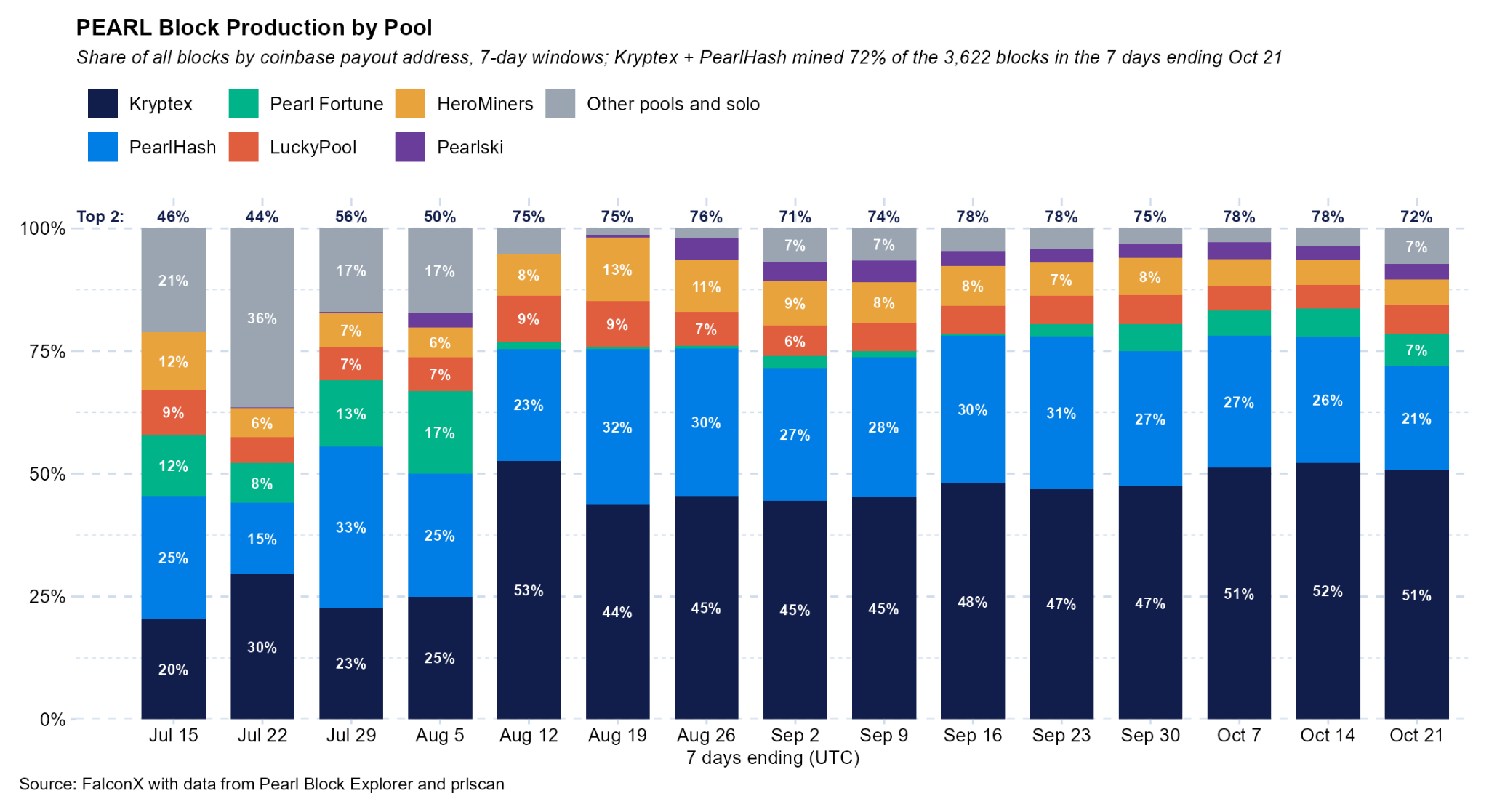
Mining pools have already formed; our analysis showed the top 2 mining pools, Kryptex and PearlHash, mined roughly 72% of all blocks for the 7 days ending October 21. This compares to BTC today where its largest 2 mining pools control approximately 47% of hashrate (7D basis, as of October 22), according to data from Luxor. For PEARL, this could drive centralization concerns, but these could just reflect the network’s early stage.
How PEARL Trades Today
Pearl mainnet went live roughly 6 months ago on April 27, 2026. Given how young the network is, it has limited exchange listings, which has likely restricted access to the token.
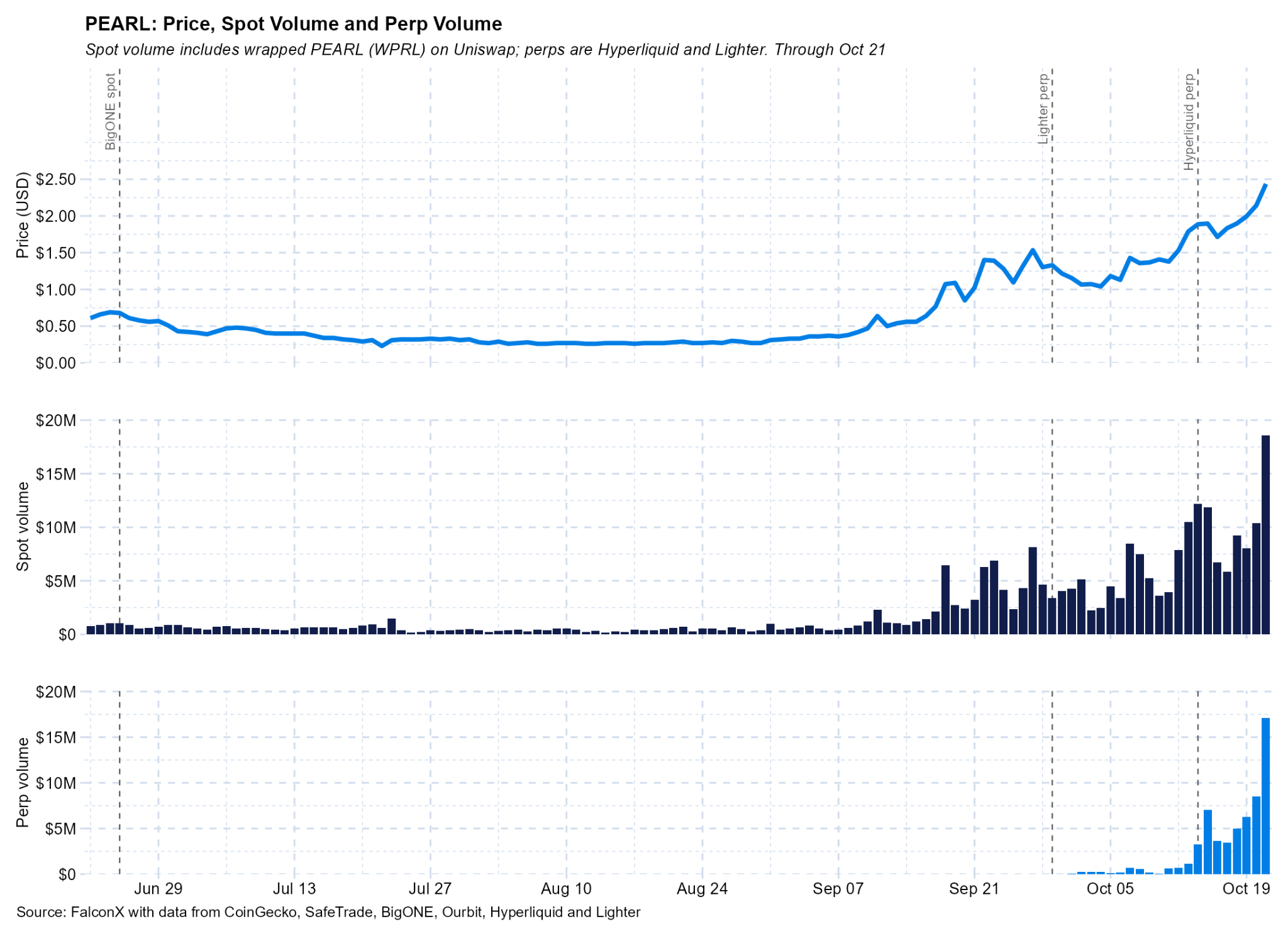
It has just a handful of spot listings as of writing, namely SafeTrade and BigONE, where it has traded since at least May 23 and June 25, respectively. Wrapped Pearl markets on Uniswap also contribute notable volumes. On the spot side, SafeTrade had around 51% volume share on a 7D basis as of Oct 21, 2026, which compared to BigONE’s 27%, Uniswap’s 12%, and Ourbit’s 8%.
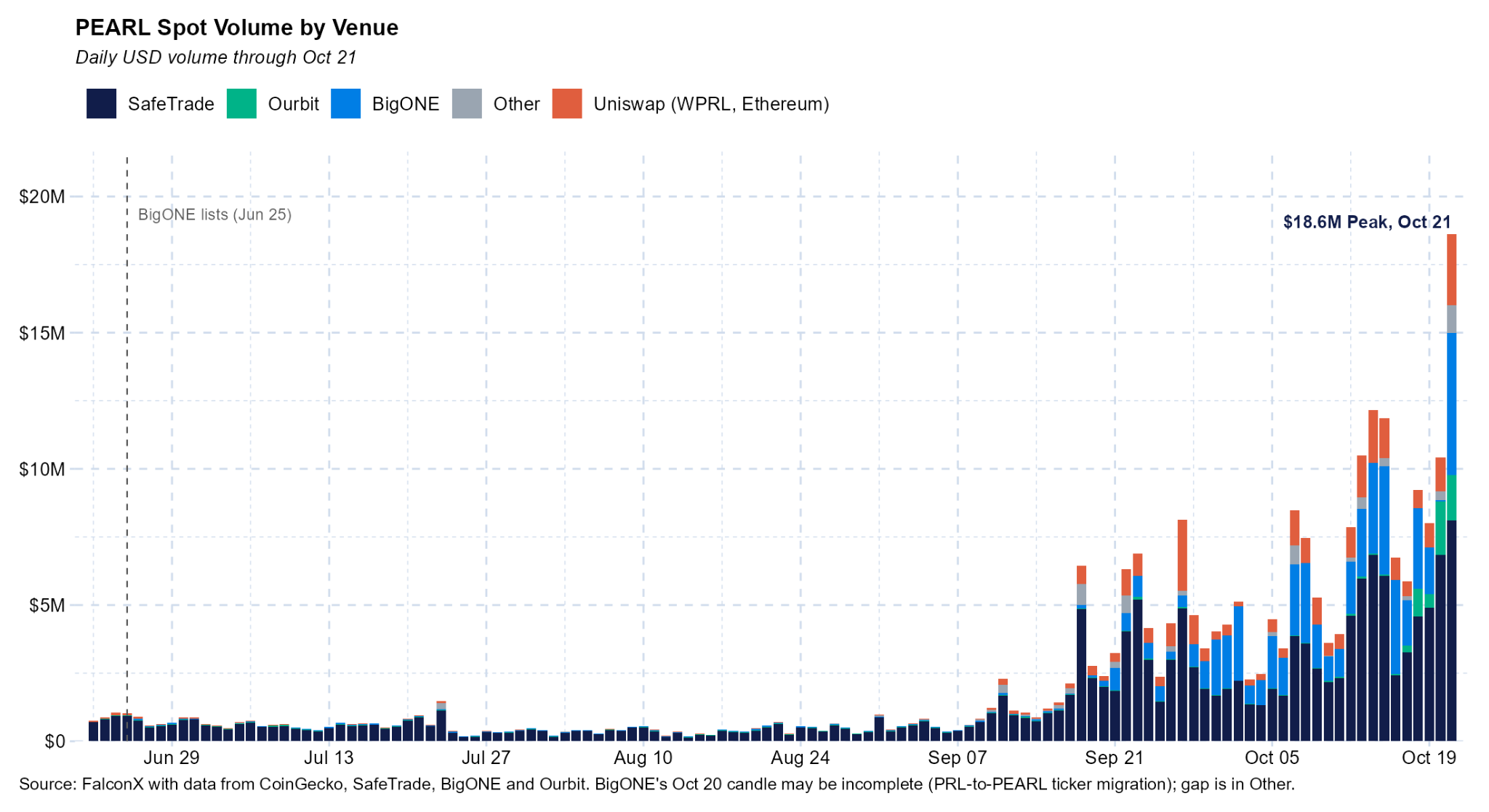
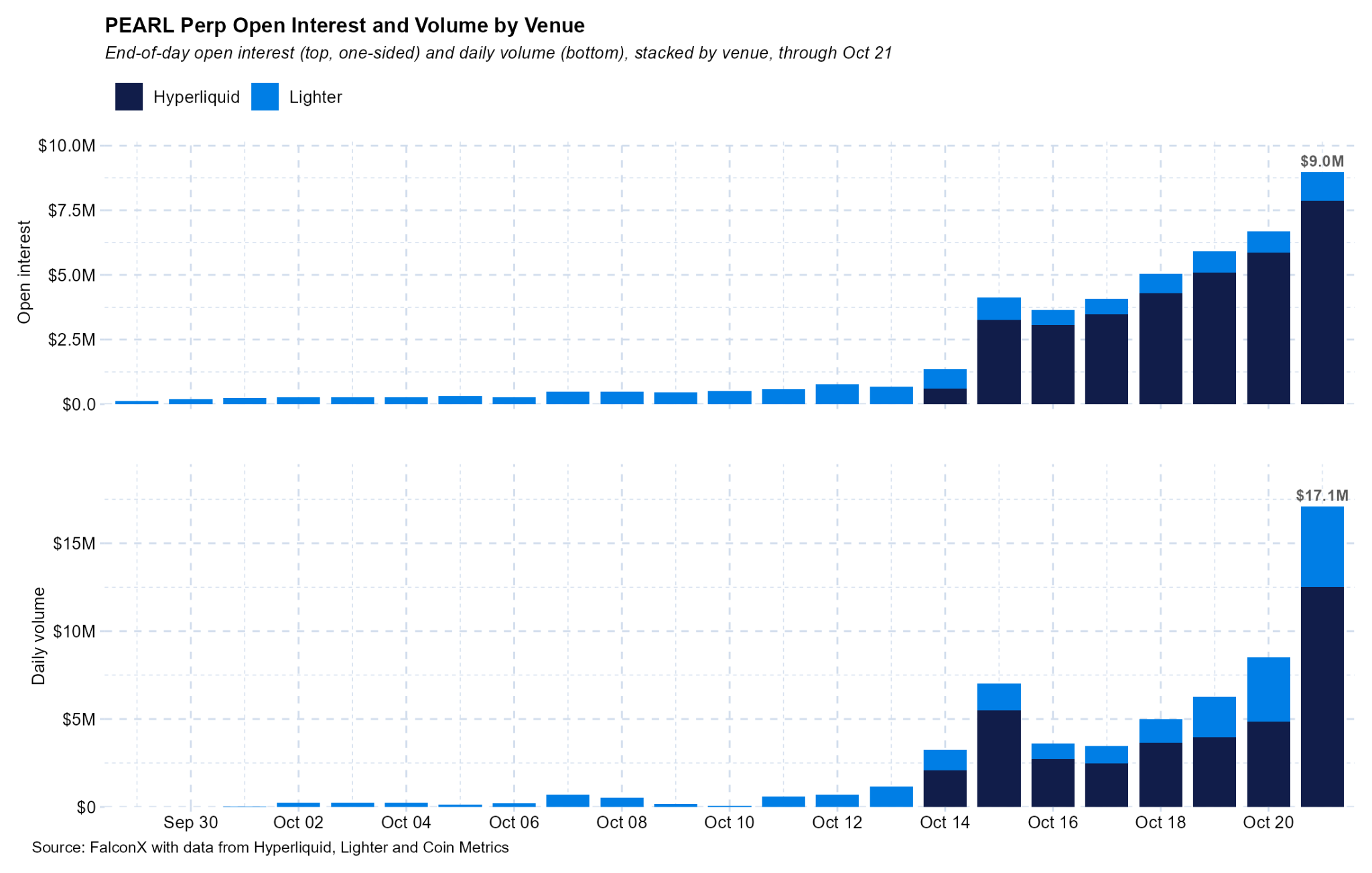
The past several weeks have delivered PEARL’s first major perps listings, starting with Lighter (September 29) and Hyperliquid (Entropy’s HIP-3 market on October 14). PEARL’s price has rallied around these events while funding has remained extremely elevated, suggesting pent-up demand from traders for long exposure. That said, this is on limited trading activity: daily spot and perps volumes peaked around $18.6M and $17.1M (both Oct 21), respectively.
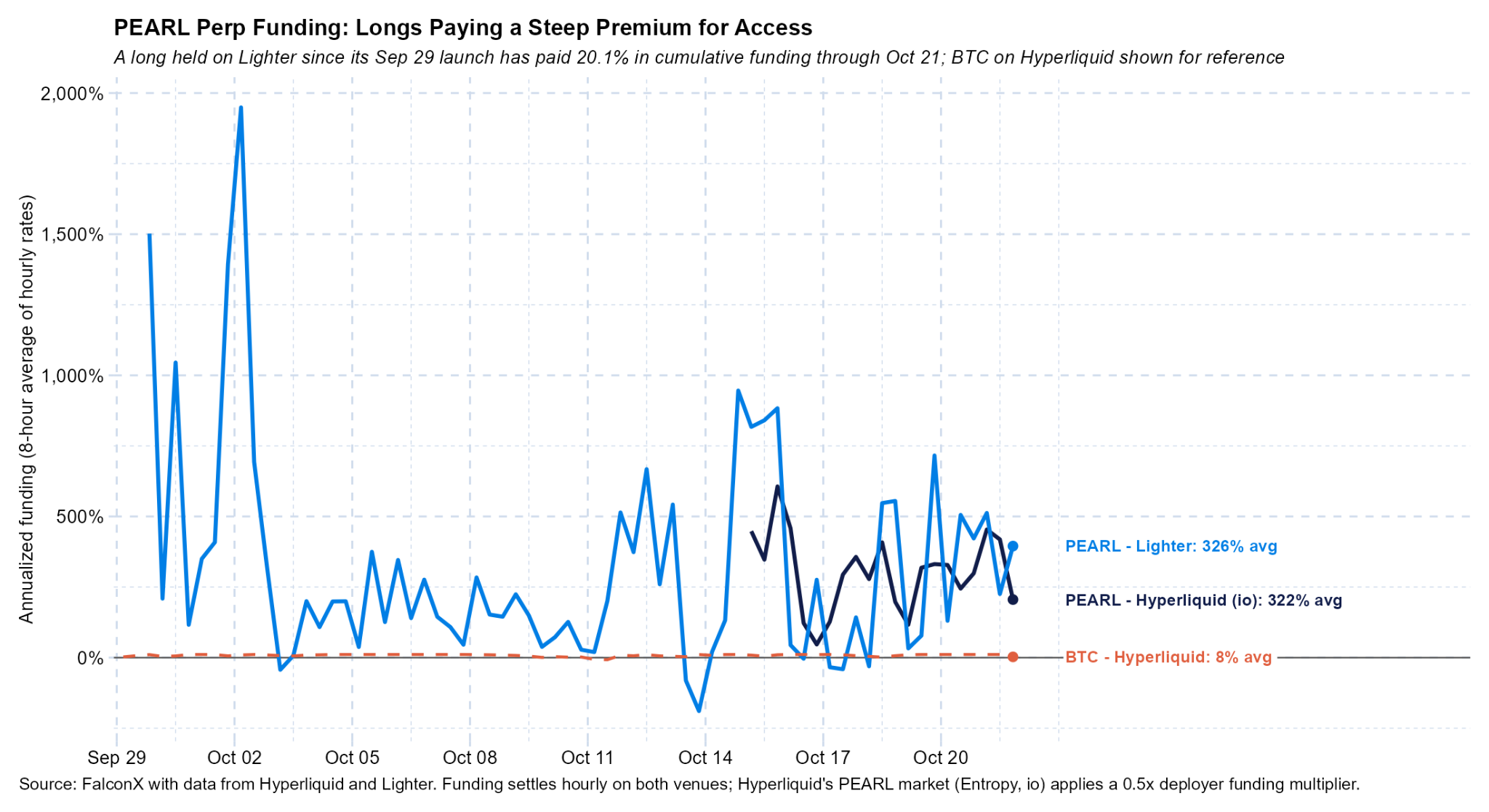
Open interest across the two main perp venues reached about $9.0M on Oct 21, with Hyperliquid accounting for roughly $7.9M of it and about 73% of the day’s $17.1M perp volume. Traders on Lighter built positions more slowly in contrast.
There is an inherent supply imbalance. Few market participants can source spot due to a variety of infrastructure-related challenges (no major venue support, limited qualified custody support, limited wallet and tooling support), leading to outsized long interest. Miners are the other side of the market, with structural selling pressure to cover GPU and operational costs, akin to the supply dynamics of any PoW network, such as BTC.
As of the 7D ending October 21, PEARL traded an average of roughly $10.1M/day in spot markets, which compares to the roughly $2.3M/day of PEARL emissions miners are receiving. Moreover, observers point to concentration of supply among early miners, raising risk of a supply glut on more accessible spot listings.
PEARL’s FDV Traction
We examined PEARL’s valuation relative to the peer set in the earliest days of trading. The peer group includes ZEC, KAS, GRIN and BEAM (PoW chains) as well as Bittensor (BTC tokenomics + AI). As of October 21, PEARL trades at $5.1B FDV, about 3.3x TAO ($1.5B) and well above ZEC ($1.4B), GRIN ($1.2B), KAS ($0.2B) and BEAM ($0.1B) at the same age (151 days of price history, counted from PEARL’s first SafeTrade trade on May 23), suggesting investors believe the underlying technology may have real potential to take share from incumbent tokens. While our dataset may not necessarily include price data from the very earliest exchange listings for some of the legacy tokens, we believe the trend of PEARL’s uniquely strong start is reflected, nonetheless.
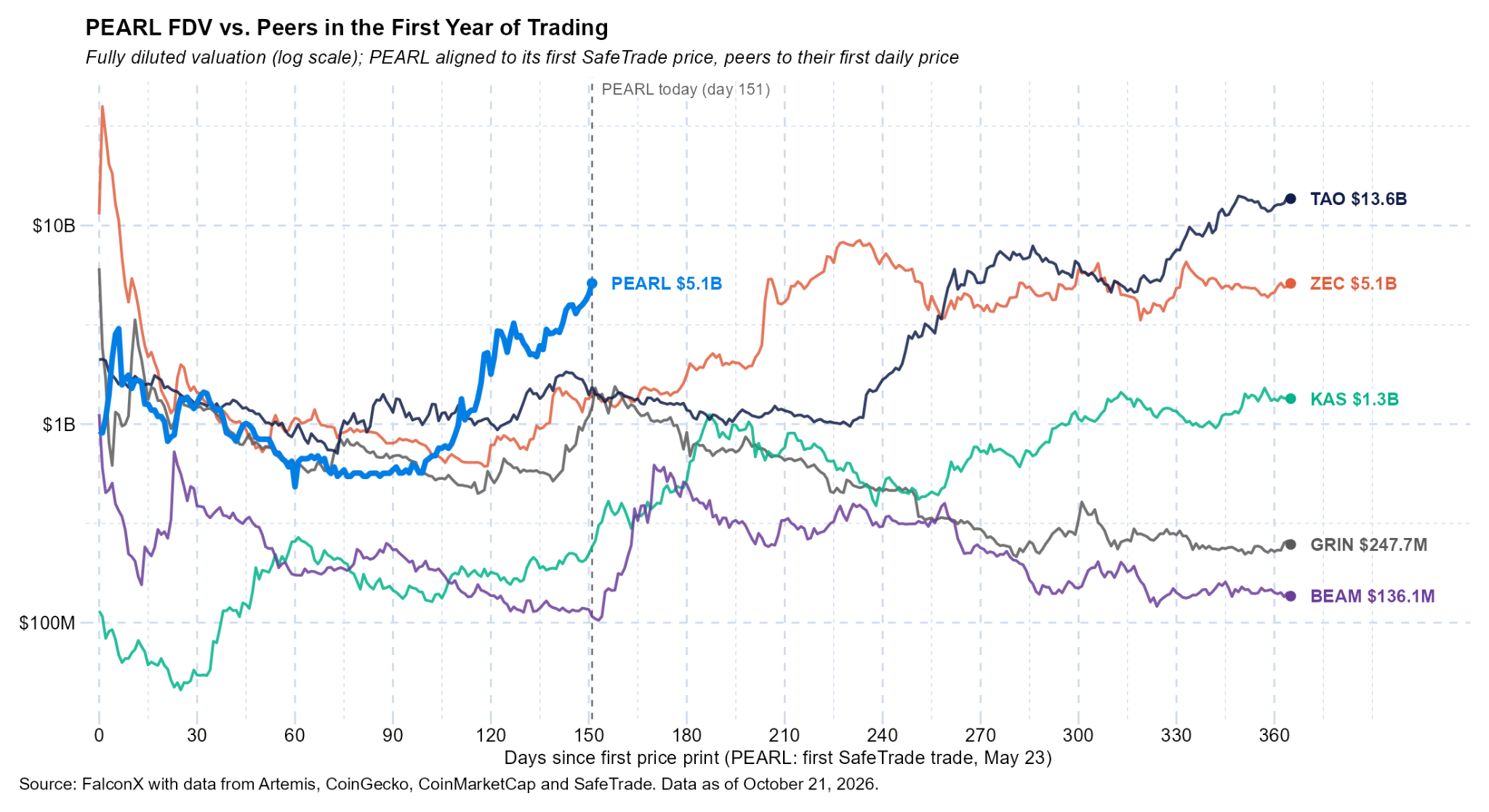
Putting aside debate on whether the FDV is too high or low, there are signs that new tokens like PEARL may be priced more efficiently today than in prior cycles. Altcoin returns have diminished and concentrated in a few winners (a Pareto-like distribution) over the past several years, driving investors to be more selective about which ones they allocate to. Total crypto market cap excluding the top 10 tokens in BTC terms is approximately -72% from its high in January 2022, per data from TradingView, demonstrating the headwinds for altcoins, including the ever-growing number of tokens launched. Moreover, standards for tokenomics disclosures as well as data platforms have improved considerably; participants today arguably are the most informed ever when evaluating cryptocurrencies.
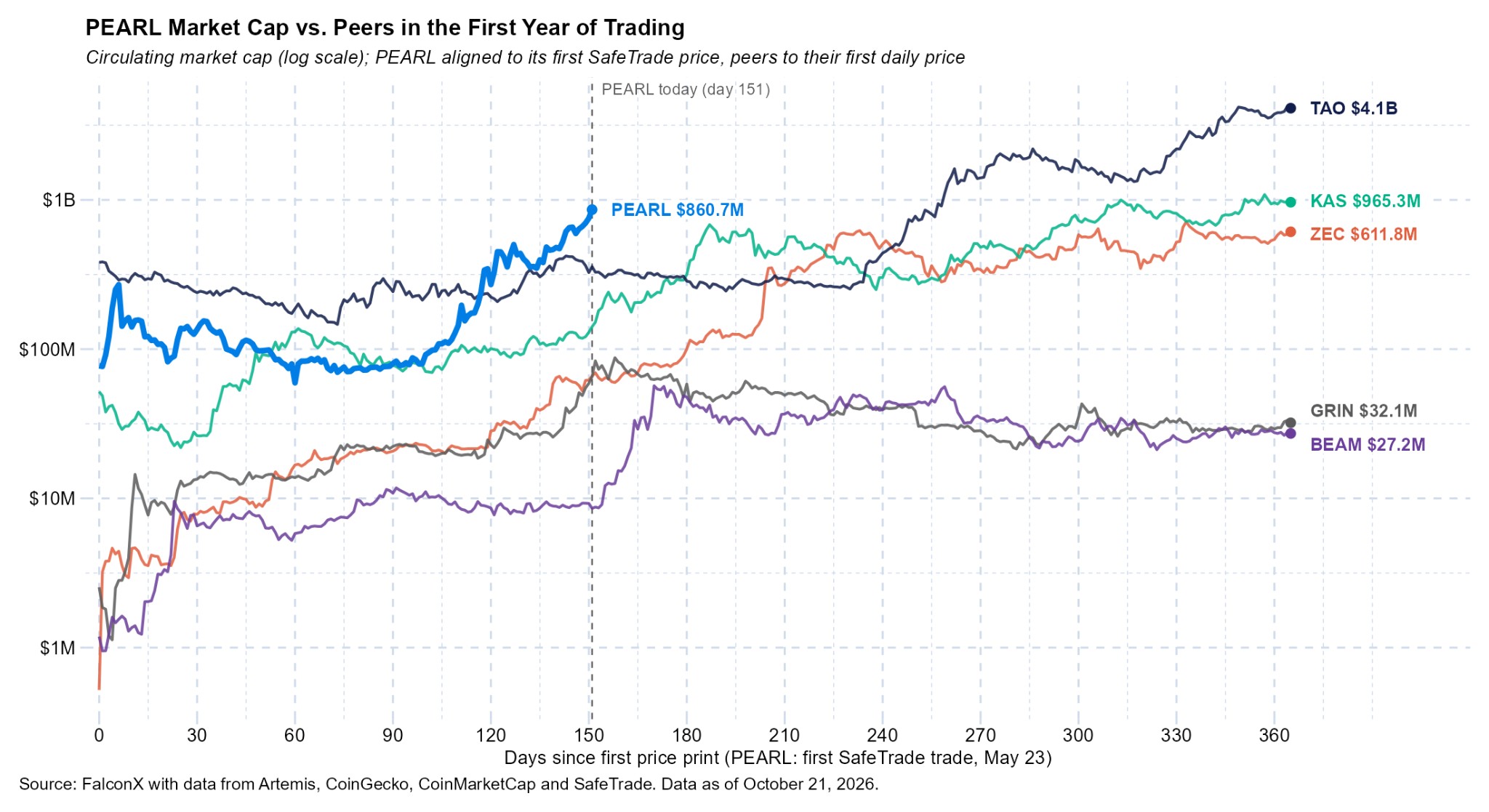
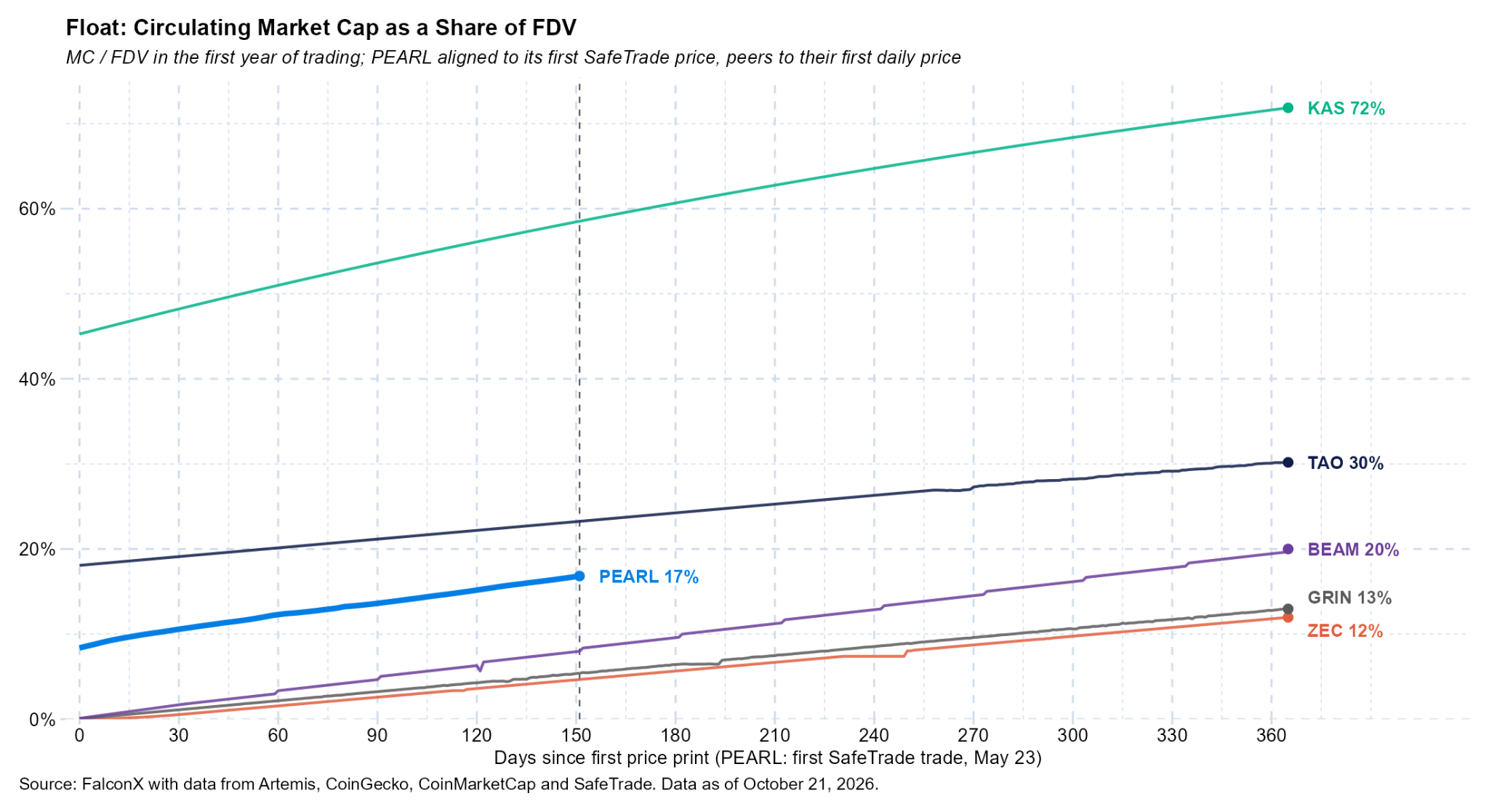
On a market cap basis, PEARL ($861M) also leads peers at roughly 2.4x TAO ($357M) and 6.1x KAS ($141M) at the same age, despite a lower share of supply in circulation (16.8% of FDV vs. 23% for TAO and 59% for KAS).
Lessons from Bittensor (TAO)
With PEARL trading activity increasing across spot and perps on the limited venue set, expectations are rising for more exchange listings. However, spot listings may not necessarily buoy price, according to trends observed with TAO.
A couple years ago, TAO was in a comparable situation to PEARL today: few spot listings and lack of custodian support despite substantial interest in its AI-focused ‘Proof of Intelligence’ network.
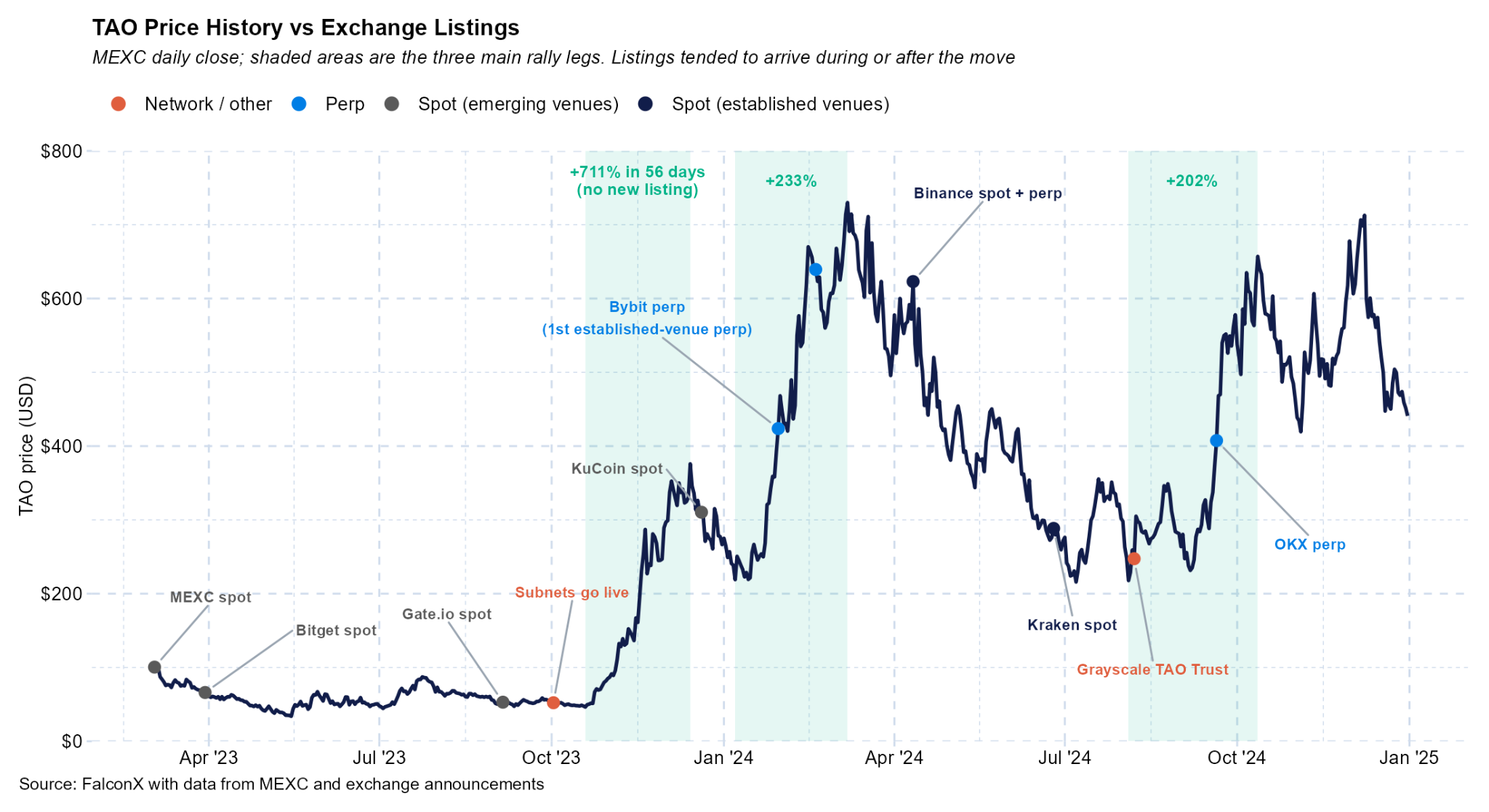
Several of its major spot listings came after its initial run had occurred, with its KuCoin spot listing following a local high and its Binance spot listing occurring after its ATH.
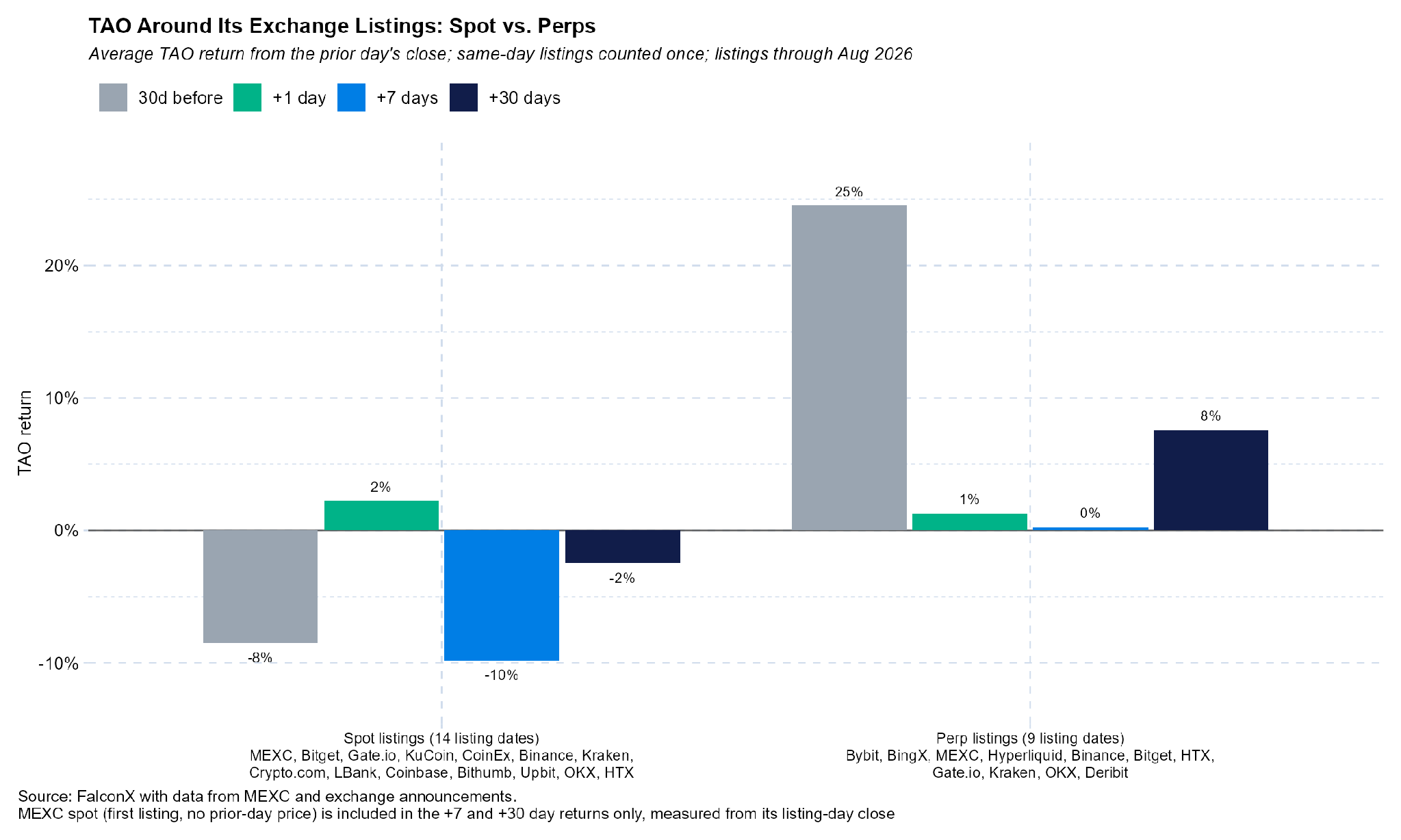
Early spot listings such as MEXC, Bitget, and Gate came as TAO was trending down, suggesting initial miner monetization through those listings may overwhelm demand on those venues. According to our analysis, TAO’s spot listings averaged a +2% move on listing day, which reversed to an average of -10% 7 days post listing and -2% 30 days post listing, while perp listings were followed by an average gain of roughly 8% over the next 30 days, though results were mixed (5 of 9 were positive).
Exploring Valuation
Given that the network is still in the early innings of its development, it may be reasonable to think about PEARL as a percentage of SoV peers BTC and ZEC, or AI peer TAO. As of October 21, PEARL trades at roughly $2.44, which corresponds to approximately $5.1B FDV.
On the SoV side, setting a target as a percentage of BTC is similar to the bull case considered for ZEC today; ZEC is already 1.6% of BTC at $28B FDV.
$10 PEARL is the next key psychological level and may be supported by ZEC’s valuation today. $10 PEARL would imply a $21B FDV, below where ZEC is trading today ($28B) and 1.2% of BTC. So, a ~1% of BTC target in the intermediate term may not be unreasonable in this context.
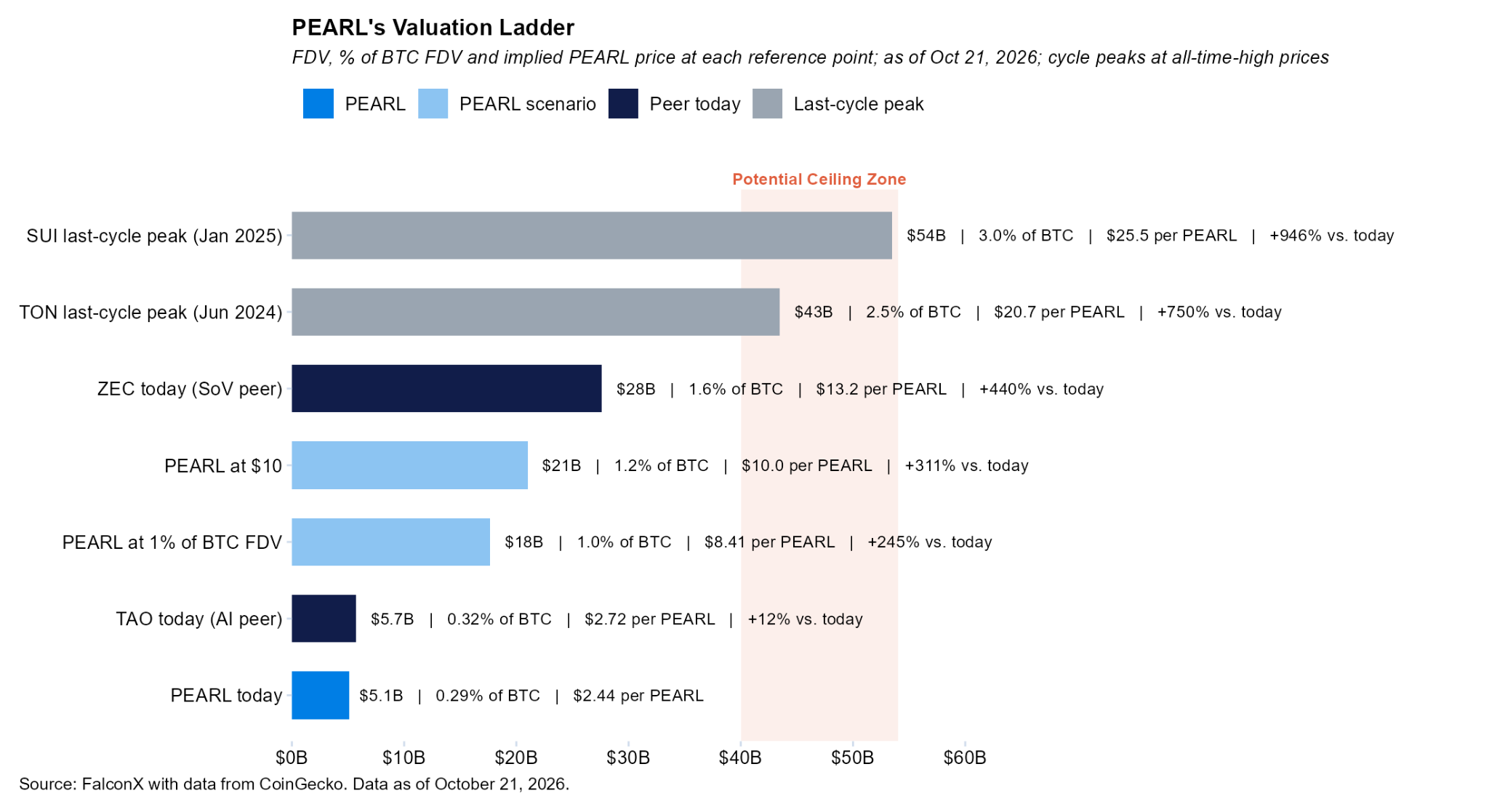
In the near term, TAO may be a more appropriate comp at only $5.7B, especially if Pearl is able to successfully onboard miners conducting ‘useful’ AI-related tasks, supporting this narrative. This could represent up to 12% upside for PEARL from current levels and translate to a PEARL price of roughly $2.72. Flipping TAO could drive further awareness of PEARL, but also attract more scrutiny over relative metrics, considering TAO’s 128+ largely AI-focused subnets reportedly generating an aggregate $50M+ of ARR.
If PEARL breaks out further, $40B-$54B FDV may be a potential ceiling, which would correspond to roughly 2.3%-3.1% of BTC’s FDV. Last cycle, TON and SUI were among the largest runners and stalled out in this region ($43B and $54B, respectively, per data from CoinGecko). Investors may be wary of these levels the next time an altcoin approaches them.
Upcoming Catalysts
Spot listings are the immediate catalysts. The PEARL spot ticker was reportedly auctioned on Hyperliquid on October 18, suggesting a Hyperliquid spot listing may be imminent. On October 19, Coinbase added PEARL to its listing roadmap, while Kraken added it to its listing roadmap on October 20. In addition, custodian BitGo announced support for PEARL, indicating some of the key accessibility challenges for institutional participants may soon be solved. Of course, TAO’s history suggests the price impact of listings can be muted or negative, so the benefit may show up first in liquidity and participation rather than price. The listings may demonstrate how much demand has been bottlenecked through lack of access to the current venue set.
Pearl’s upcoming FP8 hard fork switches the kind of multiplications the protocol uses to better align with modern AI GPUs over recreational GPUs. It transitions the protocol from using integer matrix multiplies to floating-point matrix multiplies common in AI models today (models store weights and activations as floating-point values). This stands to reduce overhead for workloads (results in 0%-3% overhead), helping make AI inference more economically viable for the network. Moreover, it stands to “professionalize” the network by supporting modern GPUs such as NVIDIA’s Hopper and Blackwell GPUs, which are specifically whitelisted in the proposal. This could evolve the network from a B2C approach, where today the network may have many small/hobbyist miners, to a B2B approach where miners are increasingly sophisticated enterprise operations or data centers themselves. The fork specification (PIP-3) is still in draft, and no activation date has been set, though it was expected within “weeks” as of late September, according to Pearl’s co-founder Omri Weinstein.
After the FP8 fork, attention should turn to its FP4 upgrade, which could come as early as Q1 2027. This stands to unlock greater throughput and lower memory use on the newest GPUs, such as Blackwells, which may further reduce overhead for miners, making duplex mining (serving inference and mining) more attractive. As of mid-September, the team estimated “a couple more months” of work to get FP4 ready for release.
While the shifts from these forks could centralize the network given the significant cost and potentially low availability of modern GPUs, they could deliver more of the “useful” work given these providers are likely to already be running paid AI workloads. Moreover, this could help draw in compute on a much larger scale, helping secure the network.
In addition, developments around Pearl’s inference platform may be worth monitoring. The platform is currently priced in USD, so any efforts to give the token utility here (such as for payment on platform, per the team) could be seen positively as they could add a potential demand sink for the token.
Takeaways
Pearl is making waves across crypto as its ambitious agenda to deliver proof of useful AI work could deliver improvements to Bitcoin’s PoW model. Upcoming spot listings stand to match investor appetite for the token with potential miner liquidity, but more importantly could improve distribution and access to the PEARL token. Meanwhile, the upcoming FP8 upgrade stands to further attach the protocol to modern AI compute and could deliver the proof of ‘useful’ work it strives for.
This material is for informational purposes only and is only intended for sophisticated or institutional investors. Neither FalconX Limited, FalconX Bravo, Inc., FalconX Delta, Inc., FalconX Golf Pte Ltd., Solios, Inc., Falcon Labs S. DE. R. L., KestrelX, Ltd., KingfisherX Limited, nor Banzai Pipeline Limited service retail counterparties, and the information in this material is NOT intended for retail investors. This material is not (i) an offer, or solicitation of an offer, to invest in, or to buy or sell, any interests or shares, or to participate in any investment or trading strategy, (ii) intended to provide accounting, legal, or tax advice, or investment recommendations, or (iii) an official statement of FalconX or any of its affiliates. Any information contained in this material is not and should not be regarded as investment advice, investment research, debt research, or derivatives research for the purposes of the rules of the CFTC, the Securities and Exchange Commission, or any other relevant regulatory body.
No discussion of a particular company or product shall be considered an endorsement of such company or product. Past performance is not indicative of future results. FalconX, and its affiliated parties, including 21shares, may hold positions in, act as a market maker for, or otherwise have a financial interest in, assets discussed herein, and may benefit from any price movements or transactions involving the subject company. This may change without notice.
Prior to entering into any proposed transaction, recipients should determine, in consultation with their own investment, legal, tax, regulatory and accounting advisors, the economic risks and merits, as well as the legal, tax, regulatory and accounting characteristics and consequences of the transaction. Pursuant to the Dodd-Frank Act, over the counter derivatives are only permitted to be traded by "eligible contract participants" (“ECP”s) as defined under Section 1a(18) of the CEA (7 U.S.C. § 1a(18)). Do not consider derivatives or structured products unless you are an ECP and fully understand and are willing to assume the risks.
Solios, Inc. and FalconX Delta, Inc. are registered as federal money services businesses with FinCEN. FalconX Bravo, Inc. is registered as a Swap Dealer with the U.S. Commodity Futures Trading Commission and is a member of the National Futures Association. FalconX Limited, FalconX Bravo, Inc., FalconX Delta, Inc., Falcon Labs S. DE. R. L., and Solios, Inc. are not registered with the Securities & Exchange Commission or the Financial Industry Regulatory Authority. FalconX Golf Pte. Ltd. is not registered or licensed by the Monetary Authority of Singapore (MAS). FalconX Limited is licensed by the MFSA as a Class 2 Crypto-Asset Service Provider (Regulation (EU) 2023/1114). It is also licensed as a Financial Institution (Cap. 376) exclusively for EMT payment services. FalconX is not a registered broker-dealer with the U.S. SEC or a member of the Financial Industry Regulatory Authority (FINRA). FalconX’s ability to offer trading in tokenized stocks and other products mentioned herein may be restricted in certain jurisdictions.
"FalconX" is a marketing name for the FalconX Group and its affiliates. Availability of products and services is subject to jurisdictional limitations and capabilities of each FalconX entity. For information about which legal entities offer trading products and services, or if you are considering entering into a derivatives transaction, please reach out to your Sales or Trading representative.