The Listing S-Curve: Liquidity Dynamics and Key Mechanics of Pre-IPO Perpetuals
With pre-IPO perpetual trading activity historically surging up to listing day, understanding these unique instruments is critical for navigating upcoming market debuts.

Investing in digital assets or tokenized equities, and their respective derivatives, involves a substantial degree of risk. Market prices can be highly volatile and unpredictable. Movements in the market can result in significant, rapid, and potentially total loss of your invested capital. Before allocating capital, you should carefully evaluate whether such investments align with your financial situation, experience, and risk tolerance. For further information regarding potential risks, please refer to the disclaimer below.
The highly-anticipated Anthropic IPO is reported to be weeks away, and trading activity in related pre-IPO perpetuals is accelerating. With price discovery happening in these markets, institutional investors have the opportunity to manage exposure ahead of the listing event. Understanding pre-IPO perpetual dynamics is key to participating, and the marquee SpaceX IPO and SK Hynix ADR listing earlier in the year provide useful observations. In this piece, we cover how pre-IPO perpetual activity has scaled leading up to the actual listing, how these contracts differ from regular perpetuals, and how they convert into equity perpetuals.
Volume and OI Built Substantially Up to the IPO
Based on historic data, activity on pre-IPO perps has increased significantly in the 30D leading up to the listing event. Activity surged on the IPO day and then tended to further rise in the following days before stabilizing, following an S-shaped curve of activity. Whether this pattern will continue remains to be seen.
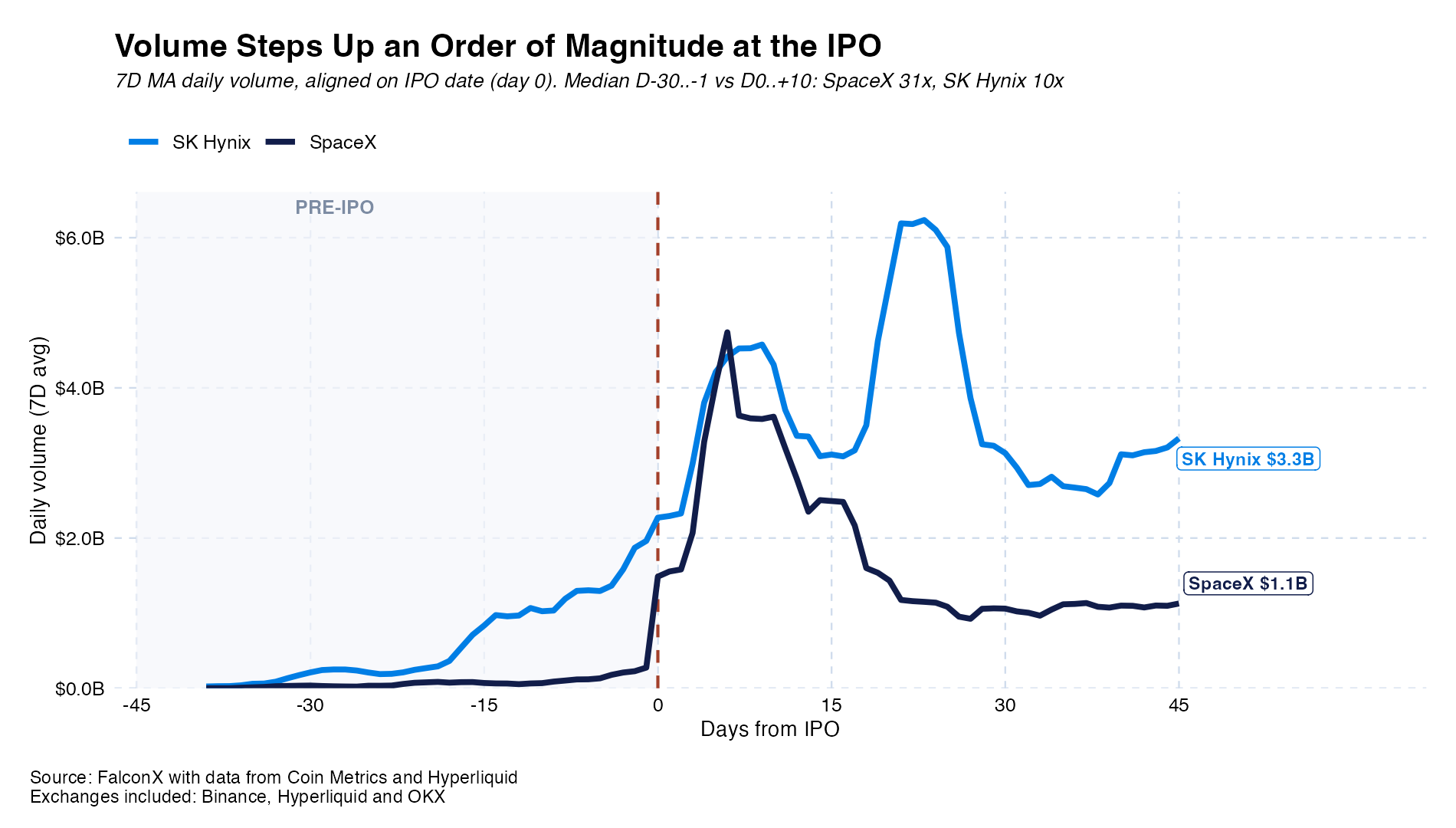
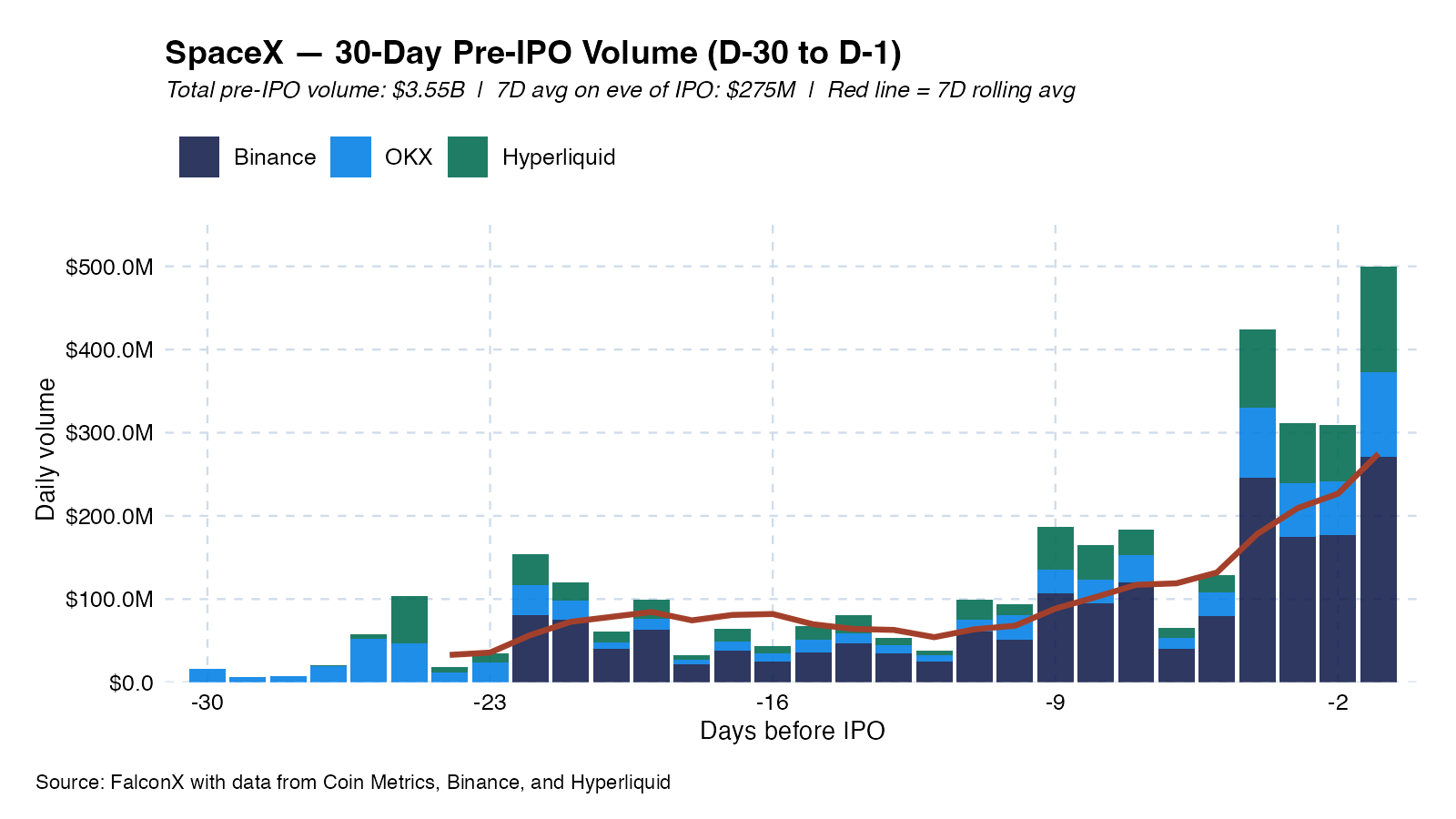
For instance, SPCX perps saw volumes oscillate around $30-$85M/day before accelerating and peaking in the last 10D, climbing to as much as $500M/day. Volumes increased approximately 17x on the day of the IPO to $8.7B as the perps converted and remained well above the pre-IPO levels for the rest of the month, averaging $2.2B/day over the following 30D.
SPCX pre-IPO perp open interest climbed steadily into the event across venues going from around $100M 15 days out, to over $300M+ right before the IPO. Open interest continued to climb after the IPO, hitting a top 11 days post the event.
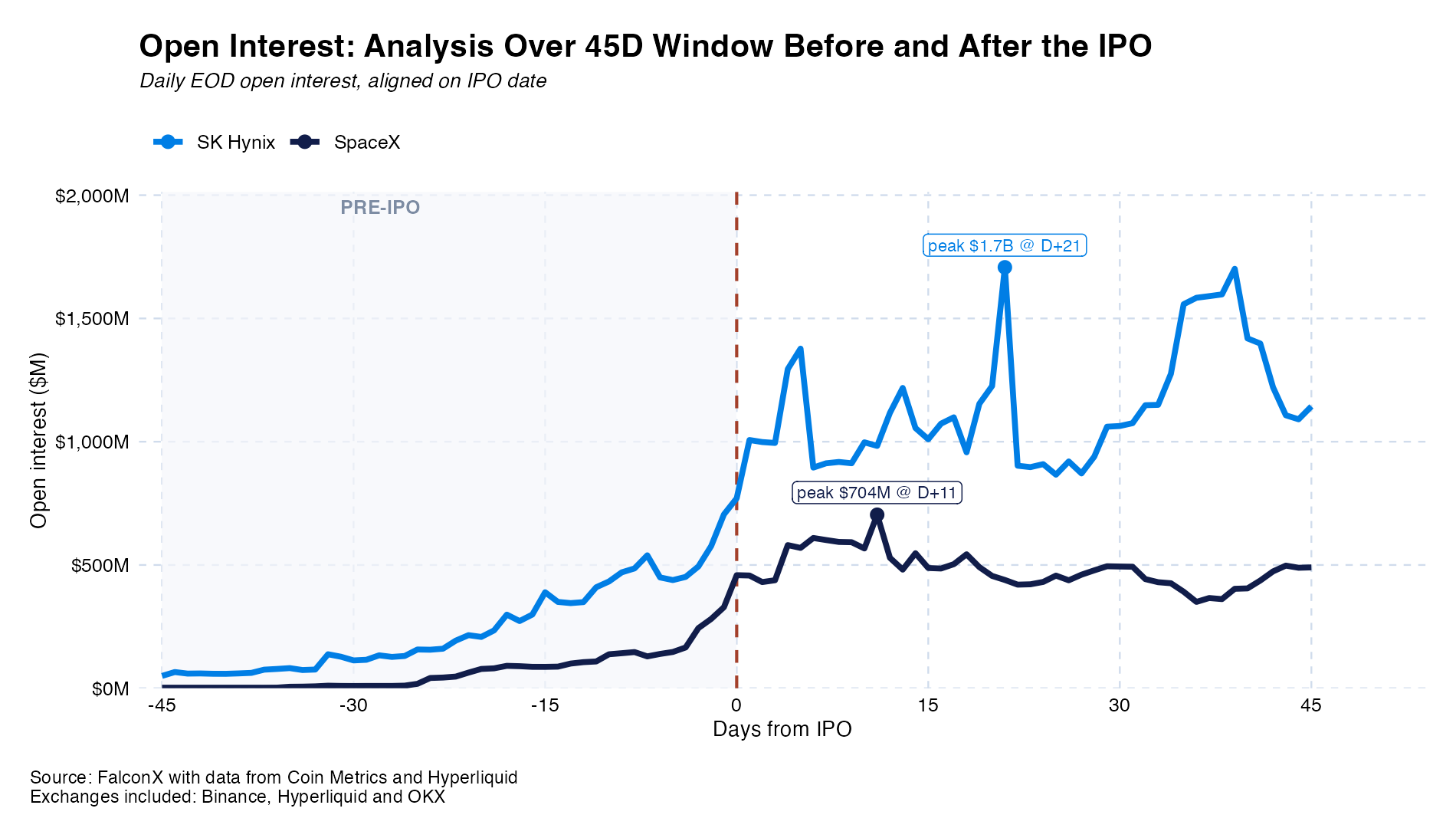
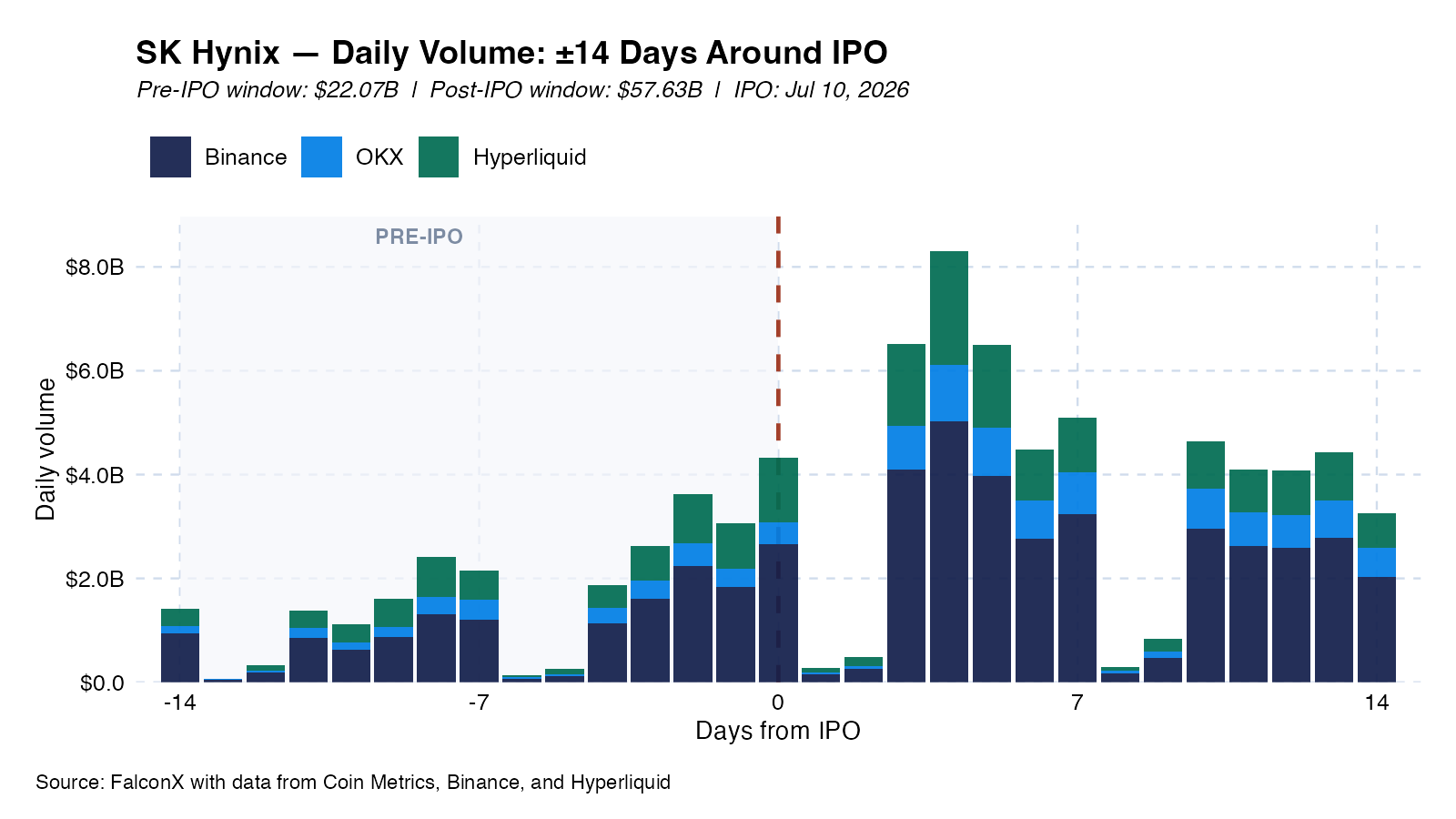
For SK Hynix, similar dynamics were observed, with both volumes and open interest picking up markedly in the days leading up to the ADR listing. SK Hynix pre-IPO perps stood at nearly $750M open interest on listing day and continued to climb after the event.
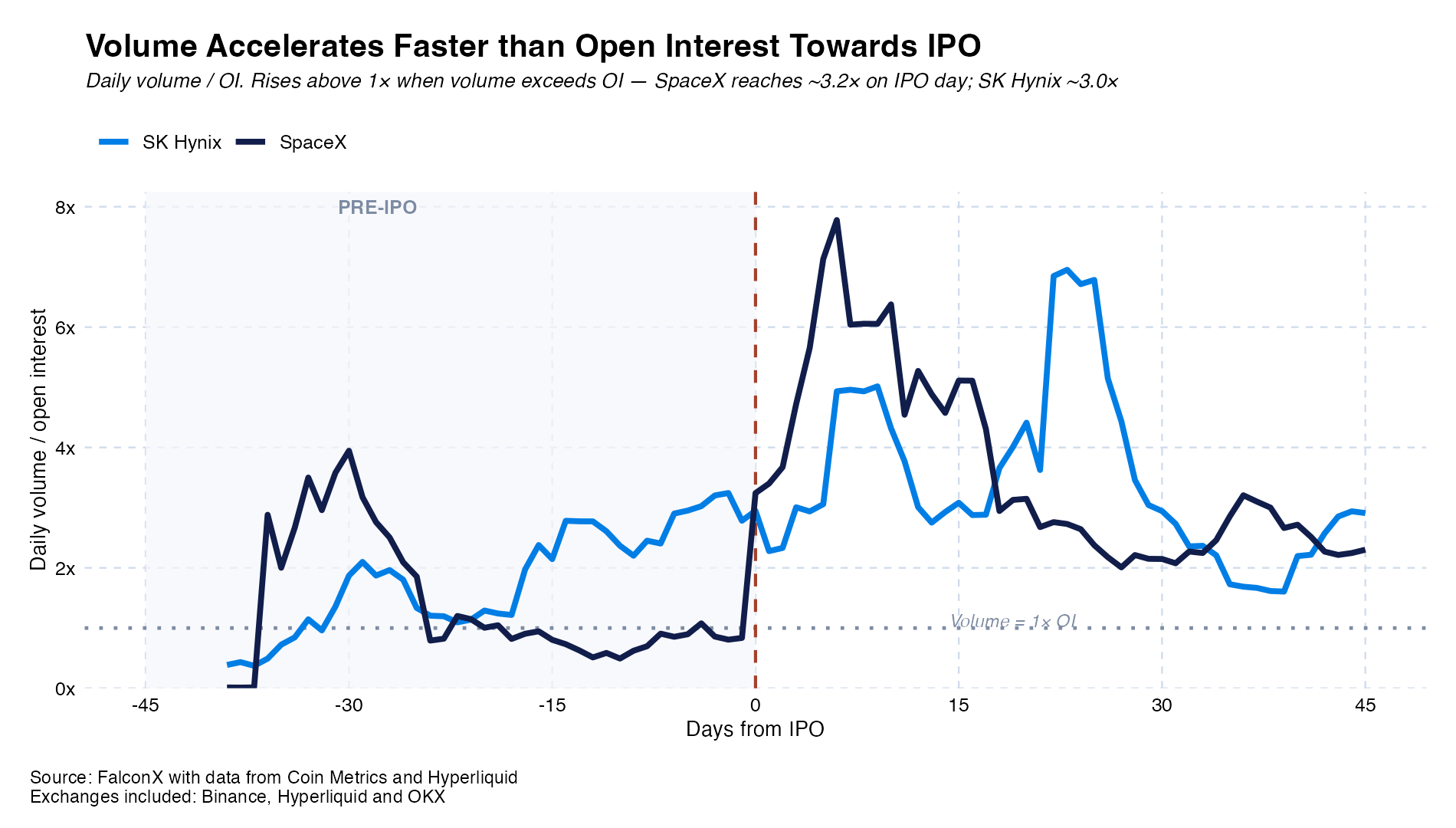
The volume/open interest ratio for the SpaceX and SK Hynix pre-IPO perps was potentially indicative of real positioning vs speculative trading activity. Pre-IPO, the ratio tended to be low as market liquidity built up, sub-1x on some days, suggesting activity was dominated by directional positioning and hedging. This ratio trended towards 3x into the IPO, reflecting an increase in active trading. For the SpaceX perps, this occurred around the IPO date, while SK Hynix perps firmly moved to the 2-3x range approximately 15 days out. After the listing, the ratio normalized in the 2x range, in line with equity RWA perpetuals.
Liquidity Quality: Depth Built, Spreads Tightened Towards IPO
For SpaceX, the median spread compressed from 3.9 bps at D-60 to D-31, to 3.1 bps at D-30 to D-11, to 2.0 bps in the final 10 days, then to just 0.7 bps post-IPO, a roughly 5.6× compression from the earliest pre-IPO window to post-conversion. SK Hynix followed a similar path (2.9 bps → 1.8 bps → 1.1 bps → 0.8 bps).
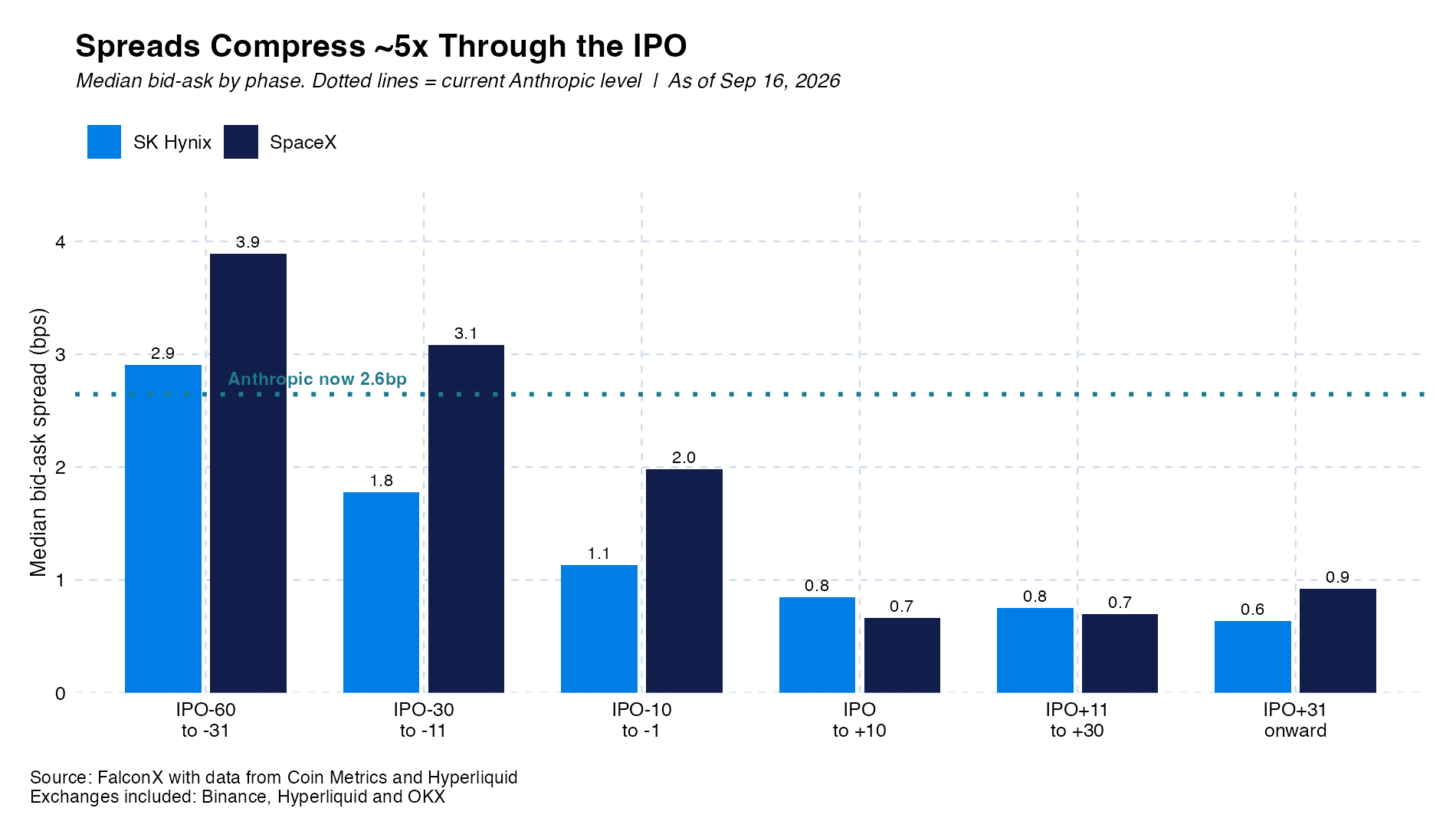
Anthropic sits at 2.6 bps on Binance, broadly consistent with SpaceX and SK Hynix at D-30 to D-11. Its Hyperliquid (io:ANTH) spread of 1.4 bps is already approaching anticipated post-IPO levels, which may reflect the active market-making HIP-3 deployer Entropy (see below) has attracted to the name.
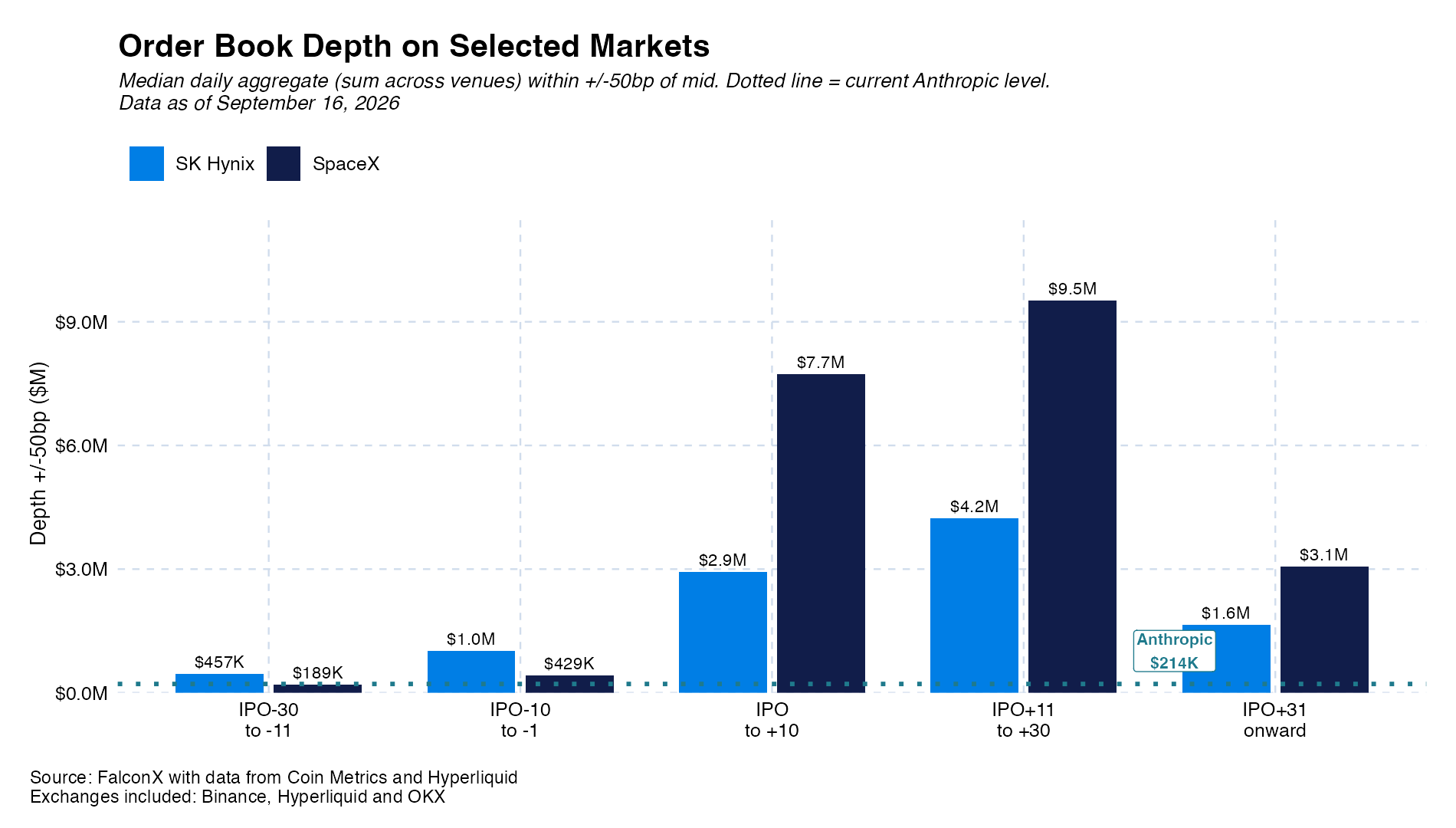
Order book depth tended to scale significantly leading up to the IPO. For SpaceX, median daily aggregate depth within 50 bps of mid rose from $189K in the D-30 to D-11 window, to $429K in the final 10 days before the IPO, then to $7.7M in the 10 days post-listing. SK Hynix perpetuals entered with a deeper book and scaled more moderately, with $457K in the D-30 to D-11 window, to $1.0M in the final 10 days, and $2.9M in the 10 days post-IPO.
Anthropic Today
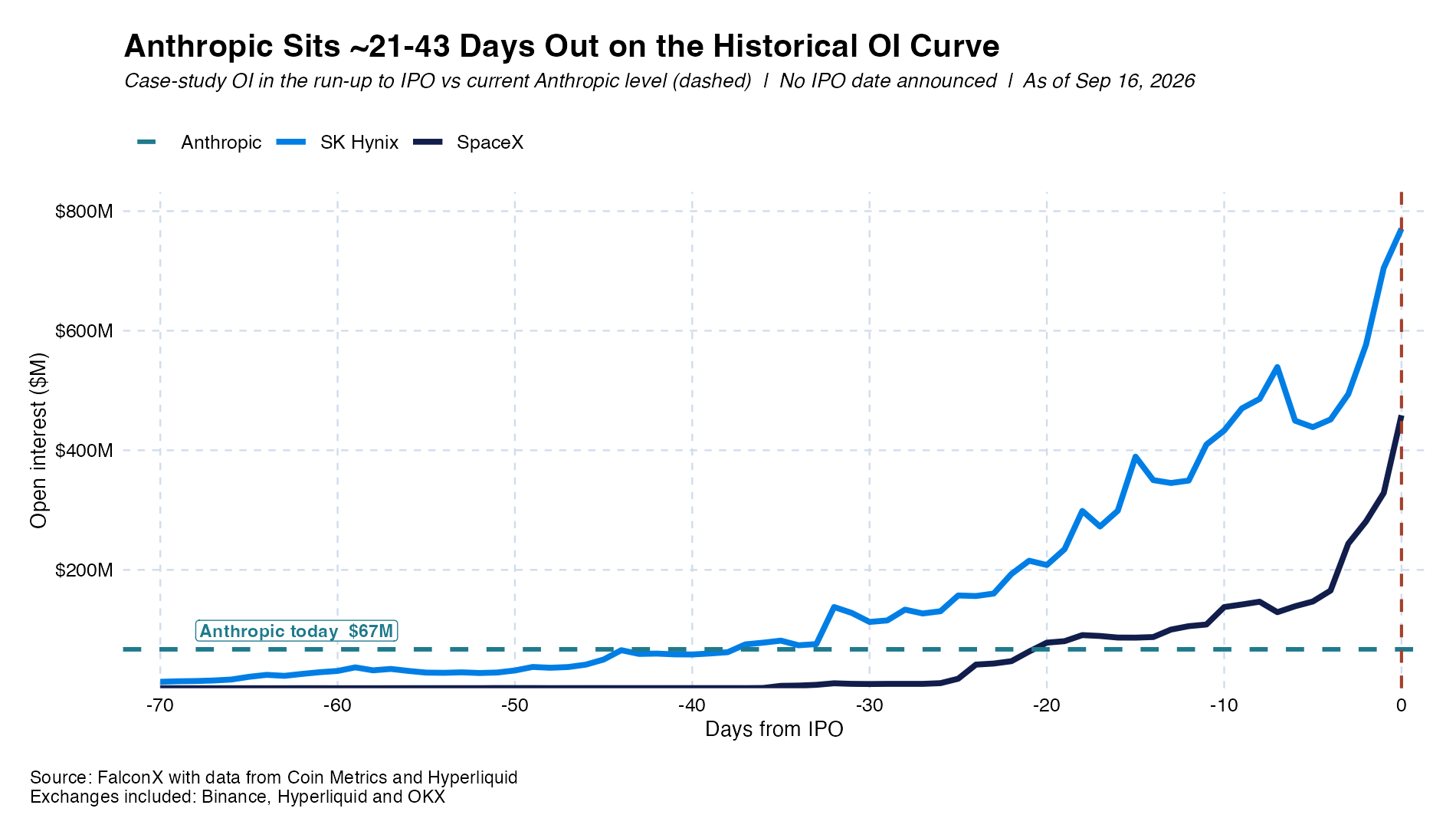
Lining up Anthropic's latest OI ($67M, as of September 16) and daily volume ($11M) against the pre-IPO trajectories of SpaceX and SK Hynix suggests Anthropic is tracking roughly 21–45 days before its potential IPO event, based on OI (21–43 days out) and volume (35–45 days out).
Its volume/OI ratio has recently fallen back to ~0.2x. A September 13 spike that briefly pushed the ratio to 0.8x proved short-lived, with volume declining for three straight sessions, while OI kept climbing ($59M to $67M, +13%). This divergence suggests the market still leans to firmer positioning than the high-turnover trading that historically precedes an imminent listing.
OI at $67M is consistent with 21 to 43 days before the IPO on the historical curves, while the latest daily volume of $11M matches the SpaceX curve at 35 days out and SK Hynix at 45 days prior to the listing event. In terms of liquidity, Anthropic's pre-IPO markets show aggregate 50 bps order book depth at roughly $214K and a daily spread of 2.6 on Binance, broadly in line with the levels SpaceX and SK Hynix perpetuals carried in their 30-day IPO window.
However, Anthropic may not necessarily mirror the trends observed in SpaceX and SK Hynix perpetuals up to their listing events. It is a pure-play frontier AI lab, rather than an AI-infrastructure or AI-adjacent hardware business, which may drive its pre-IPO perpetuals activity differently. In addition, its rumored IPO deal terms – target of up to $100B proceeds vs SpaceX’s $75B base/$86B including greenshoe, valuation ($2T), and potential $10B anchor from Nvidia – may impact activity.
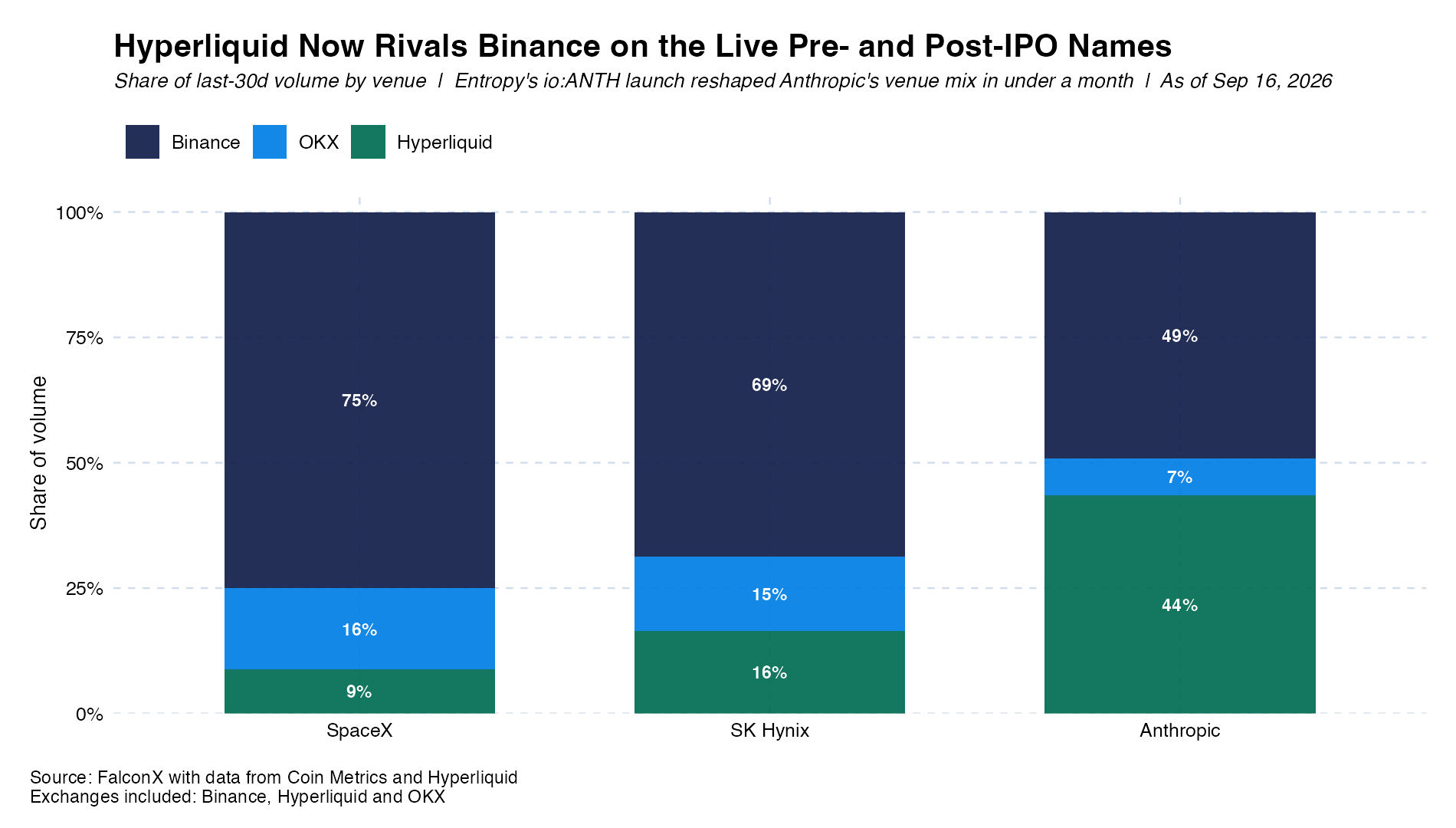
One dynamic playing out with the Anthropic market is the greater share of trading activity on Hyperliquid compared to the now post-IPO SpaceX and SK Hynix perpetuals. Our prior analysis found that Hyperliquid tends to have a larger role in earlier price discovery and cedes volume share to Binance post public listing.
Pre-IPO Mechanics by Venue
Hyperliquid: TradeXYZ (Market Ticker: xyz)
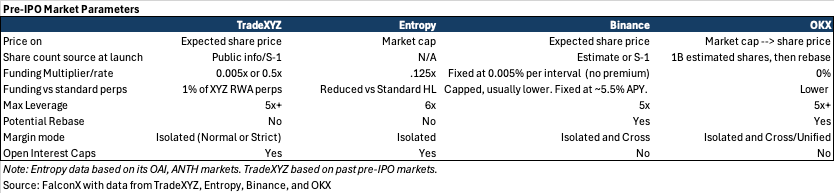
On Hyperliquid, TradeXYZ is historically the leading deployer of these pre-IPO markets. In addition to capturing 99%+ of real-world asset perpetual activity on Hyperliquid in recent weeks, it is known for piloting pre-IPO markets that successfully converted to regular perpetuals after the event, such as Cerebras, SpaceX, and SK Hynix. As of September 16, 2026, it has not yet launched pre-IPO markets on Anthropic and OpenAI and is likely waiting for the S-1 to do so.
For its pre-IPO perpetuals, TradeXYZ sets a discretionary reference price to launch the market with. Afterwards, the oracle price becomes a 30-min exponentially-weighted moving average (EMA) that is a function of the book’s impact price difference. This means the oracle price is a relatively slow-moving reflection of book pressure and depth, rather than the last trade. TradeXYZ’s pre-IPO perps use the expected share price as the reference asset.
TradeXYZ uses discovery bounds (for example +/-20% over a period) to prevent runway prices, especially while the book is still thin (also a unique issue for 24/7 markets, or when there isn’t a real reference price on these markets until post-IPO). A slower oracle eventually resets the band allowing for greater price discovery to continue. The pre-IPO markets are allotted a certain number of resets in each direction, although TradeXYZ has discretion to change parameters if needed.
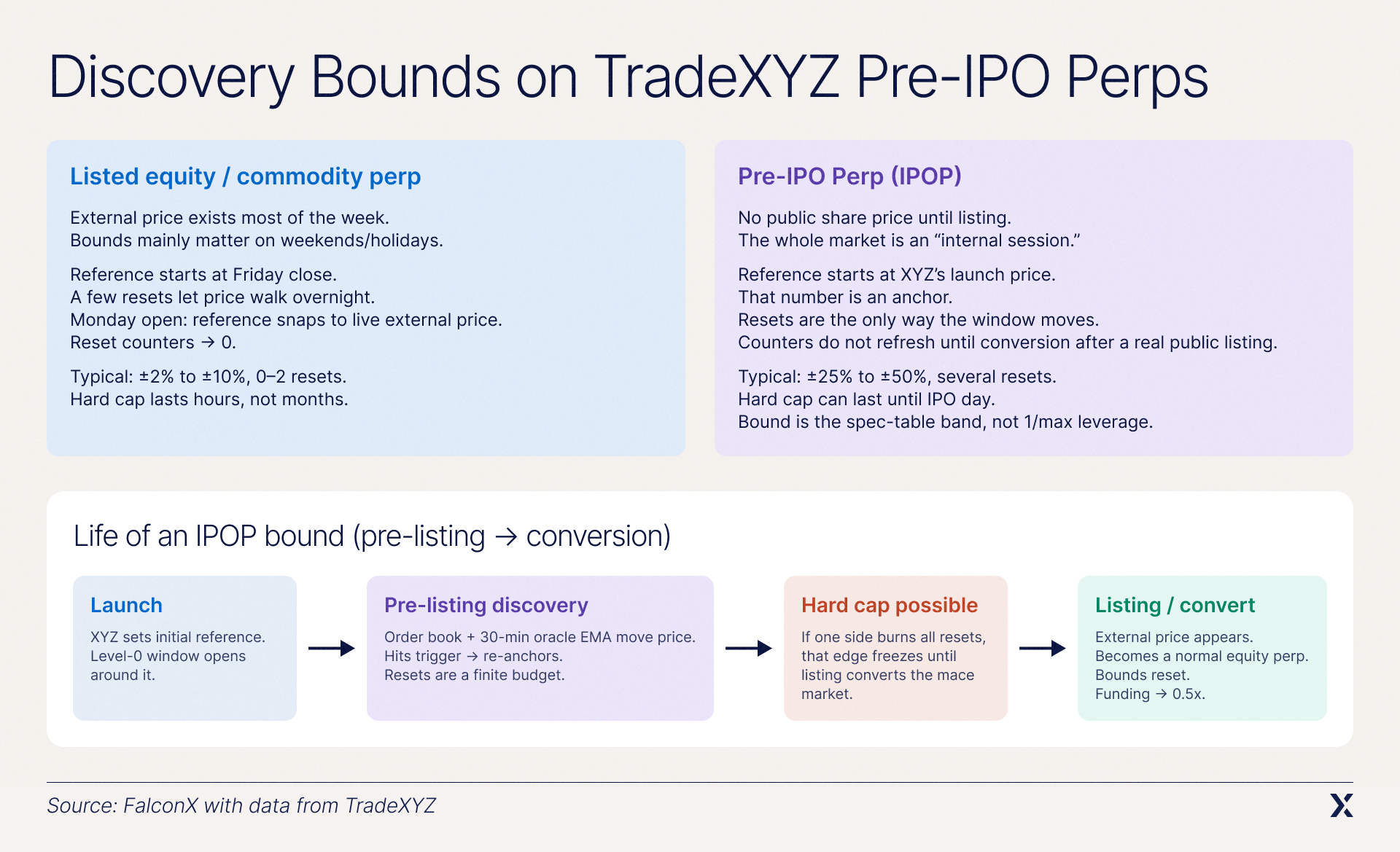
At the IPO, the perpetual’s oracle feed transitions from the internal book to a live price oracle that references the underlying once external market data is sufficient, typically the first regular session after listing. During the core 24/5 session (external price window, Sunday 8pm ET to Friday 8pm ET), the oracle price is an aggregated price of the listed share, with Blue Ocean ATS (BOATS) as the overnight venue. During the weekend session, the market uses the same internal price mechanism it did in the pre-IPO period (30-min EMA of book impact-price), using Friday’s last external print as the anchor price.
During the pre-IPO period, funding is often set low to encourage price discovery. For TradeXYZ markets, this tends to use a 0.005 multiplier (1% of regular TradeXYZ perps). Upon conversion, funding moves to its standard 0.5 multiplier (which is already lower relative to traditional Hyperliquid crypto perps). Note that SpaceX, Quantinuum, and Cerebras pre-IPO perps launched with a 0.5 funding multiplier.
TradeXYZ maintains a list of specifications for its active markets here as well as for its pre-IPO markets here.
TradeXYZ sets the anticipated listing date and grace period, such as 60 days, at launch for the markets. If the underlying company fails to list in the period, the market may go to alternative settlement, where it settles at the full period TWAP (since market launch), rather than a shorter lookback window. However, TradeXYZ maintains discretion to change this. Consequently, it highlights risks with pre-IPO perpetuals include pricing risk, conversion risk, settlement risk, as well as liquidity risk.
Hyperliquid: Entropy (Market Ticker: io)
Entropy is a newer HIP-3 deployer, launching its first markets in August 2026. As of September 16, 2026, its pre-IPO markets include Anthropic and OpenAI on Hyperliquid.
Both of these markets aim to track the market cap of the underlying, rather than share price. The market settles if the company remains unlisted at the resolution timestamp.
The oracle price for Entropy’s pre-IPO perpetuals is a blend of an internal price from the local order book and an external price which is from an aggregate of private-market data sources. The external sources could be other derivatives, private market making sources, funding rounds, or secondary transactions, graded by the Entropy team on factors such as recency, depth, and historical reliability. The blended weight is a function of realized two-sided executable depth on the local book, defined as within 200 bps of the mid-price, with a minimum 5% weight towards the external price. The mark price uses a 5-minute EMA of the exchange mid, which works in part to smooth any temporary dislocations.
Similar to TradeXYZ’s discovery bounds, Entropy uses extreme mark bounds in its pre-IPO markets to limit runaway price moves. The difference here is that trades can occur outside the bounds, but the published mark and oracle prices are limited to the bounds. Trading occurring outside the bounds leads to funding premiums that help restore the price back into the bounded range. The upper bound for the Anthropic market is currently set to 4,200, implying a $4.2T valuation, while its OpenAI market has it at 3,000, or $3.0T.
Entropy’s docs state that pre-IPO markets use a 0.0125x funding multiplier, which would be slightly higher than that of equivalent TradeXYZ. On September 9, Entropy announced that it increased the funding multiplier 10x to 0.125x for its OpenAI and Anthropic markets, making the difference even greater.
The Entropy pre-IPO markets have a scheduled end two years from contract announcement, where the contract cash settles to the 6-month trailing time-weighted average price (TWAP) of the mark price. Entropy can also issue an early settlement notice.
Entropy maintains discretion over parameters such as upper and lower bound limits, leverage, as well as open interest limits, which are currently $39M for Anthropic and $10M for OpenAI. It also notes its markets can be subject to ADL, given its markets do not have a liquidator vault backstop yet.
The conversion process involves the oracle price becoming a 1-hour EMA of the mark three calendar days before the IPO. Once a public-stock price is observable, the market adopts the public-equity oracle regime and transitions to a regular equity perp.
Binance
Binance’s pre-IPO perpetuals reference the expected share price, rather than the market cap. Mark price is derived entirely from the local order book as the average of the last 10 seconds of trade prices and is computed every second. No external reference is used. The price is subject to a +/-1% second cap to help prevent runaway moves.
Binance fixes its pre-IPO market funding rate to 0.005% per interval (0.015% daily, 5.5% annualized), with no interest component, and caps leverage for these markets at 5x. This compares to standard Binance crypto perpetuals which have a 0.01% interest parameter (~11.0% annualized), although TradFi perpetuals have a 0% interest parameter and only have the premium/discount funding vs the oracle price.
Upon the IPO, Binance transitions the instrument to a standard TradFi perpetual contract once it determines a stable mark price can be derived from the underlying; it may not necessarily convert immediately. During this process, the mark price transitions from the pre-IPO trailing average of trade prices to its TradFi perpetual formula. The smoothing process to transition the calculation may take up to 3 hours depending on price volatility and stability of the index price. During weekends/off-hours, the price index for the equity perps switches to be order book-derived, with a +/-3% range allowed between the mark price and price index.
If the IPO fails to occur, a notice is issued in advance, and the settlement price methodology is provided in a subsequent announcement.
Binance may adjust the contract if the number of shares disclosed in the S-1 are 3%+ different than its original assumption. Since this impacts the price of the contract, similar to a stock split, Binance halts trading for 15-30 minutes, followed by a cancel-only phase of up to 5 minutes. This can potentially lead to trading or workflow disruptions for traders.
OKX
OKX’s pre-IPO instruments aim to provide exposure to the underlying company’s market cap rather than the share price. OKX initially estimates the share count for the market and rebases the contract parameters once the company publicly discloses the total share count. The rebase process may see trading suspended for approximately 5 minutes and enters a post-only phase of 2-5 minutes.
OKX launched its pre-IPO perpetuals on OpenAI and Anthropic in May 2026. Funding is fixed at 0%. It also uses a Price Band to limit runaway prices. Order prices cannot exceed these caps.
During the perp conversion post-IPO, the contract stops using its pre-market index (book’s last trade/estimated valuation) and transitions to using the standard stock index and full funding formula. Outside traditional exchange hours, the price index partly reflects OKX’s own contract price as well as pricing on other crypto exchanges, and is subject to index bands protection of a 10% range vs the last available stock price update. The timing of conversion is at OKX's sole discretion and occurs only when the market is considered stable.
OKX also has similar pre-IPO perpetuals classified as “X-Perps”, or expiry perpetuals. These have a five-year expiry, though are intended to behave as perps. Part of the reason may be to comply with Europe’s MiFID rules where dated futures are not classified as CFDs and therefore can be offered to a broader audience.
Takeaways
Volumes and open interest on pre-IPO perps tends to grow strongly into the actual listing, with SpaceX and SK Hynix demonstrating demand for these instruments. Order book depth builds and spreads compress going into the event; trading activity jumps further in the post IPO days before stabilizing.
In terms of mechanics, pre-IPO perpetuals across leading venues may see differing prices due to referencing the share price vs company valuation. There are also important differences in oracle and mark price calculations across venues, as well as funding calculations and rates, which may be key knowledge for traders. Though each venue exercises some discretion on their market parameters and mechanisms, they are all set up for a seamless transition to a regular perpetual on the day of the IPO.
Disclaimer
This material is for informational purposes only and is only intended for sophisticated or institutional investors. Neither FalconX Limited, FalconX Bravo, Inc., FalconX Delta, Inc., FalconX Golf Pte Ltd., Solios, Inc., Falcon Labs S. DE. R. L., KestrelX, Ltd., KingfisherX Limited, nor Banzai Pipeline Limited service retail counterparties, and the information in this material is NOT intended for retail investors. This material is not (i) an offer, or solicitation of an offer, to invest in, or to buy or sell, any interests or shares, or to participate in any investment or trading strategy, (ii) intended to provide accounting, legal, or tax advice, or investment recommendations, or (iii) an official statement of FalconX or any of its affiliates. Any information contained in this material is not and should not be regarded as investment advice, investment research, debt research, or derivatives research for the purposes of the rules of the CFTC, the Securities and Exchange Commission, or any other relevant regulatory body.
No discussion of a particular company or product shall be considered an endorsement of such company or product. Past performance is not indicative of future results. FalconX, and its affiliated parties, including 21shares, may hold positions in, act as a market maker for, or otherwise have a financial interest in, assets discussed herein, and may benefit from any price movements or transactions involving the subject company. This may change without notice.
Prior to entering into any proposed transaction, recipients should determine, in consultation with their own investment, legal, tax, regulatory and accounting advisors, the economic risks and merits, as well as the legal, tax, regulatory and accounting characteristics and consequences of the transaction. Pursuant to the Dodd-Frank Act, over the counter derivatives are only permitted to be traded by "eligible contract participants" (“ECP”s) as defined under Section 1a(18) of the CEA (7 U.S.C. § 1a(18)). Do not consider derivatives or structured products unless you are an ECP and fully understand and are willing to assume the risks.
Solios, Inc. and FalconX Delta, Inc. are registered as federal money services businesses with FinCEN. FalconX Bravo, Inc. is registered as a Swap Dealer with the U.S. Commodity Futures Trading Commission and is a member of the National Futures Association. FalconX Limited, FalconX Bravo, Inc., FalconX Delta, Inc., Falcon Labs S. DE. R. L., and Solios, Inc. are not registered with the Securities & Exchange Commission or the Financial Industry Regulatory Authority. FalconX Golf Pte. Ltd. is not registered or licensed by the Monetary Authority of Singapore (MAS). FalconX Limited is licensed by the MFSA as a Class 2 Crypto-Asset Service Provider (Regulation (EU) 2023/1114). It is also licensed as a Financial Institution (Cap. 376) exclusively for EMT payment services. FalconX is not a registered broker-dealer with the U.S. SEC or a member of the Financial Industry Regulatory Authority (FINRA). FalconX’s ability to offer trading in tokenized stocks and other products mentioned herein may be restricted in certain jurisdictions.
"FalconX" is a marketing name for the FalconX Group and its affiliates. Availability of products and services is subject to jurisdictional limitations and capabilities of each FalconX entity. For information about which legal entities offer trading products and services, or if you are considering entering into a derivatives transaction, please reach out to your Sales or Trading representative.
.jpg)